
Meal Prep
Bulking Meal Prep: How to Actually Gain Weight Without Feeling Sick
Most guys trying to bulk hit a wall around week two: they're stuffed, bloated, and still 400 calories short of target. Eating more sounds simple until you're staring down your third chicken breast of the day with zero appetite left. The fix isn't eating more food. It's eating denser food.
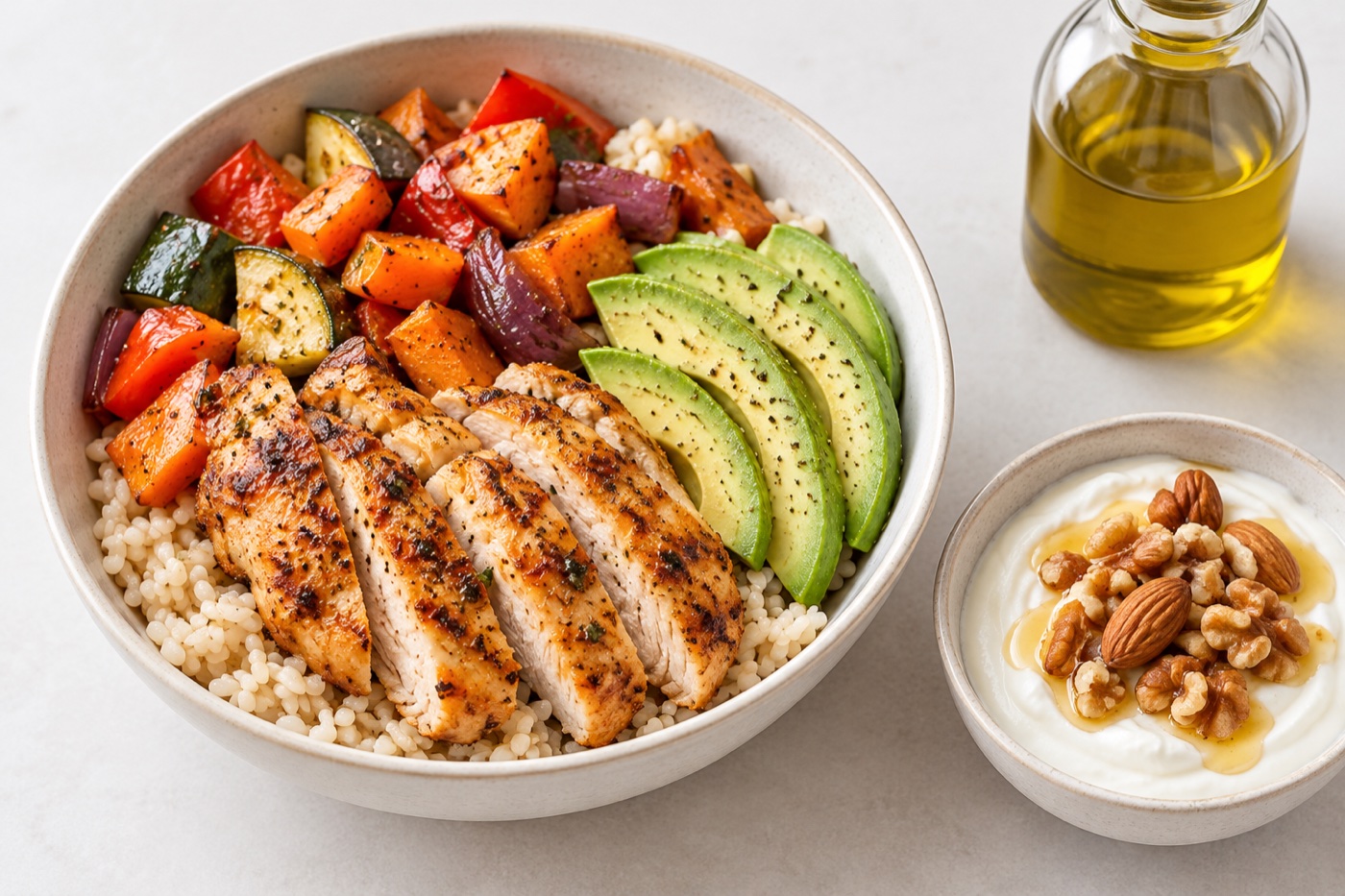
AI-generated editorial illustration.
Here's the math nobody explains well. A pound of muscle doesn't require a pound of extra food — it requires roughly 300 to 500 extra calories a day, consistently, for weeks. That's it. Not 1,500. Not "eat everything in sight." Just 300 to 500 calories above what you burn, day after day, which is exactly why most people fail at it: it's boring, and it's easy to undershoot without noticing.
Why "just eat more" doesn't work
Telling someone to eat more calories is like telling someone to save more money — technically correct, practically useless without a system. The problem is volume. If you're eating clean, high-fiber, high-protein food (which you should be), you fill up fast. A chicken breast, a cup of rice, and a plate of broccoli is maybe 550 calories and feels like a full meal. To hit a 3,200-calorie day eating like that, you'd need to eat close to 6 full meals of that size. Nobody sustains that for more than a few days.
The people who bulk successfully aren't eating more meals. They're making the same meals carry more calories without adding more volume.
The 300-500 rule, and why more isn't better
A surplus of 300 to 500 calories a day is the sweet spot backed by most sports nutrition research — enough to support roughly 0.5 to 1.5% of your bodyweight in gain per month. Go bigger than that and the extra calories don't turn into extra muscle; your body can only build so much tissue per week regardless of how much fuel you give it. Anything past what it can use gets stored as fat. This is the actual reason "dirty bulking" gets people fat instead of big — not because bulking itself is bad, but because a 1,500-calorie surplus is 1,000 calories of pure fat storage every single day.
If you're more advanced in training, stay closer to 250-300 over maintenance. If you're new to lifting, you can push toward 500 and still gain mostly muscle, since beginners build tissue faster.
Add fat to everything — it's the easiest lever you have
This is the single highest-leverage move in bulking meal prep: fat is more than double the calories of protein or carbs per gram, and it barely changes how full a meal makes you. A tablespoon of olive oil drizzled over rice adds about 120 calories in five seconds. Two tablespoons of peanut butter stirred into oatmeal adds 190 calories without adding a single extra bite of volume. A quarter cup of shredded cheese on your eggs adds 110 calories and takes zero prep time.
Do this across three meals a day and you've added 400+ calories without eating one extra gram of food. That's most of your surplus, handled passively.
Olive oil on your rice (120 cal) + peanut butter in your oats (190 cal) + a handful of nuts as a snack (170 cal) = 480 extra calories, almost zero added chewing.
Drink some of your calories
Liquid calories skip the fullness signals that solid food triggers, which is exactly why a smoothie feels so much lighter than a plate with the same calorie count. A shake built from whole milk, a banana, two tablespoons of nut butter, and a scoop of protein powder easily hits 600-700 calories and takes under two minutes to make. Drink one alongside breakfast or between meals and you've closed most of the surplus gap without touching your appetite for dinner.
This is also the move for people who genuinely struggle to eat enough — "hardgainers" with a fast metabolism or a small appetite. Whole milk alone is roughly 150 calories per cup; swap your water for milk across a few meals and the calories add up without any extra planning.
Batch-cook the base, vary the fat source
The efficient way to meal prep a bulk is the same as any meal prep: cook a big batch of protein and a big batch of carbs once, then customize each portion. The difference for bulking is what you add on top. Cook 3 pounds of chicken thighs (they're fattier and higher calorie than breast, which works in your favor here) and 6 cups of rice on Sunday. Then rotate the topping each day — one portion gets olive oil and parmesan, another gets a peanut sauce, another gets avocado and a fried egg on top. Same base, different calorie load, and it stops tasting like the same meal on repeat.
| Add-on | Calories | Effort |
|---|---|---|
| 1 tbsp olive oil | ~120 | 5 seconds |
| 2 tbsp peanut butter | ~190 | 10 seconds |
| 1/2 avocado | ~160 | 30 seconds |
| 1/4 cup shredded cheese | ~110 | 5 seconds |
| 1 cup whole milk (vs water) | ~150 | 0 seconds |
Track for two weeks, then stop
You don't need to log every meal forever, but the only way to know whether you're actually in a surplus is to track for a stretch and check the scale trend. Weigh yourself 3-4 times a week, same time of day, and look at the weekly average — daily fluctuations from water and sodium will lie to you. If your average isn't moving up by roughly 0.25 to 0.5 pounds a week, you're not eating enough, no matter how full you feel. Adjust by adding one more calorie-dense add-on per day rather than a whole extra meal.
Bulking meals, planned for you
Kenji Meals builds your weekly plan around your calorie and macro targets — including the surplus math for bulking — so you're not guessing whether today's meals actually add up.