
Budget Cooking
The Cheapest Protein Sources in 2026, Ranked by Cost Per Gram
A pound of chicken breast at $4.49 gets you about 100 grams of protein. A pound of dry lentils at $2.29 gets you the same 100 grams for half the price — and on a good week, a dozen eggs beats them both. Most people eating high-protein are overpaying by two to three times, because almost nobody shops by the number that actually matters: grams of protein per dollar.
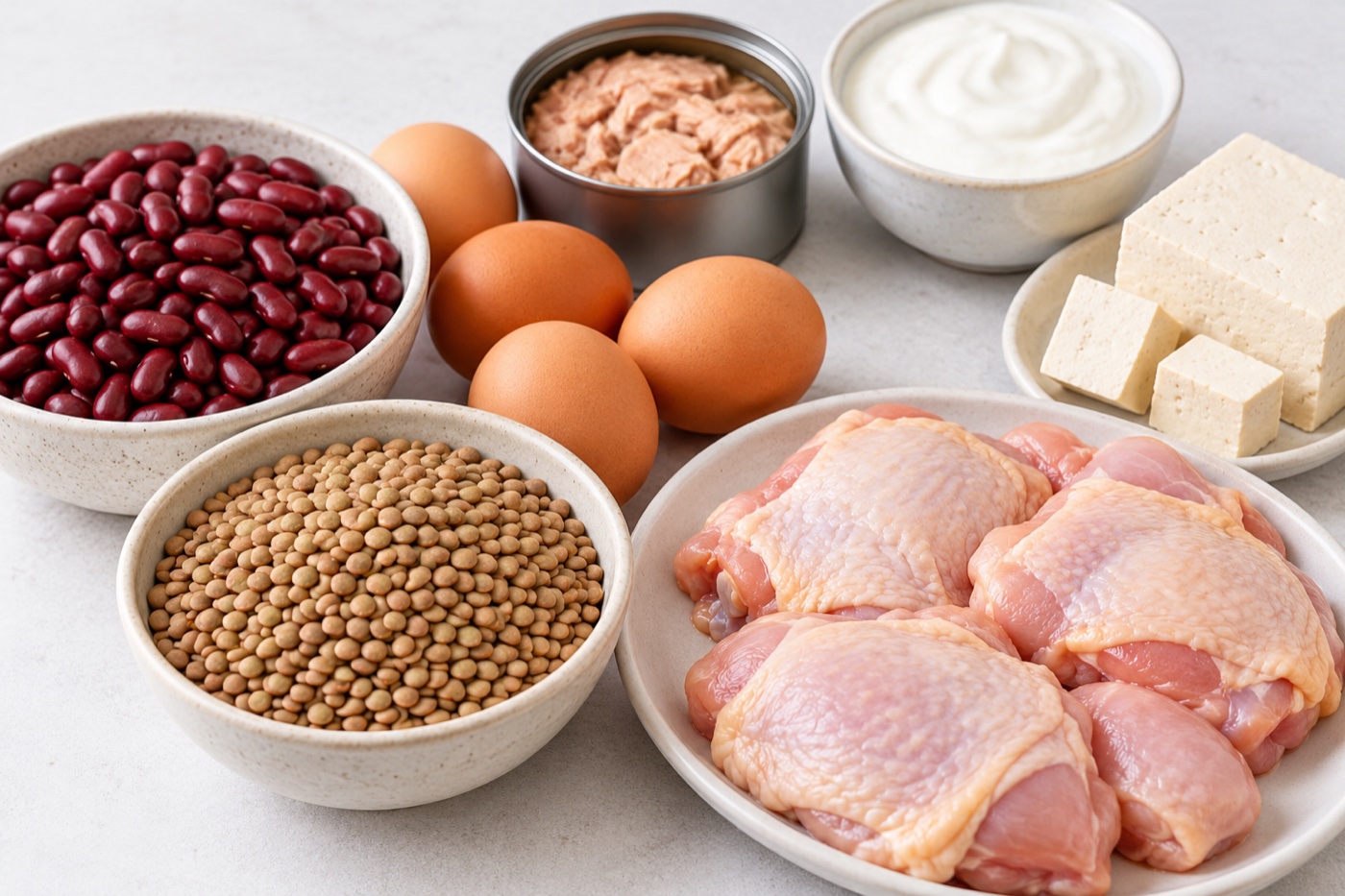
AI-generated editorial illustration.
The only number that matters: grams per dollar
Protein is the expensive macro. Carbs and fat are nearly free — rice, oats, oil, butter all cost pennies per serving. Protein is where your grocery bill actually lives, which means it's the one place where shopping smarter produces real savings instead of coupon-clipping noise.
Here's the spread. In 2026, protein at US grocery stores runs anywhere from about $0.02 per gram (dry lentils, eggs on sale) to $0.09 per gram (lean ground beef, name-brand Greek yogurt cups). That sounds like small change until you scale it. Someone eating 150g of protein a day at $0.03 per gram spends $4.50 a day on protein — about $135 a month. The same person buying at $0.08 per gram spends $12 a day, or $360 a month. Same macros, same goals, roughly $2,700 a year difference. That's the entire case for this article in one paragraph.
The 2026 rankings
These are typical US grocery prices as of mid-2026. Your store will vary a little, but the order holds up almost everywhere.
| Source | Cost per gram | Cost per 30g serving | Catch |
|---|---|---|---|
| Dry lentils | $0.02–0.03 | ~$0.70 | Volume, cook time, incomplete amino profile |
| Whole eggs | $0.03 | ~$0.90 | None, honestly |
| Whey protein (5-lb bag) | $0.02–0.03 | ~$0.75 | Upfront cost of the bag |
| Cottage cheese (2-lb tub) | $0.03–0.05 | ~$1.00 | Texture, if that's your thing |
| Chicken thighs (bone-in) | $0.04–0.06 | ~$1.30 | Trimming and bones |
| Canned tuna | $0.04–0.06 | ~$1.40 | Mercury caps it at a few cans a week |
| Chicken breast | $0.04–0.07 | ~$1.60 | Price swings — buy on sale only |
| Greek yogurt (large tub) | $0.04–0.06 | ~$1.60 | Cups cost double the tub |
| Tofu (extra-firm) | $0.04–0.07 | ~$1.60 | Needs seasoning effort |
| 90% lean ground beef | $0.08–0.09 | ~$2.50 | Tasty, but you're paying for it |
Eggs and cottage cheese are quietly beating meat
The dairy and egg aisle is the most underrated corner of the store for protein, and it isn't close. At $2.50 a dozen — where prices have settled for much of 2026 — eggs deliver about 72 grams of complete protein for the price of a coffee. They cook in five minutes, need zero prep, and have a perfect amino acid profile. Nothing else on this list combines cheap, complete, and convenient like that.
Cottage cheese is the other sleeper. A 2-pound store-brand tub runs $4.50 to $5.50 and holds roughly 200 grams of protein — a full cup gives you 25 grams for about 60 cents. Compare that to the $3 single-serve protein cups by the register, which sell the same 25 grams for five times the price. Same ingredient, different packaging, and the packaging is what you're paying for.
The lentil asterisk
Dry lentils top nearly every protein-per-dollar chart, and the math is real: a $2.29 pound of dry lentils contains around 100 grams of protein. But most articles stop there, and that's where they get it wrong. Getting 40 grams of protein from lentils means eating roughly two full cups of cooked lentils — a genuinely large amount of food — and lentil protein is low in methionine, so on its own it's not pulling equal weight with animal sources.
The fix isn't to skip lentils. It's to stop treating them as your protein and start treating them as your protein multiplier. A lentil-rice base with a modest 100g portion of chicken thigh on top gets you a complete, 45-gram-protein dinner for under $2. The lentils cut your meat cost in half; the meat fixes the amino profile. That combination is the actual budget play, not a bowl of plain lentils.
Whey is a grocery, not a supplement
People mentally file protein powder under "supplements" — an optional extra for gym people, a splurge. The 2026 prices say otherwise. A 5-pound bag of whey concentrate from a reputable brand costs about $45 and contains roughly 75 servings of 25 grams each. That's 60 cents a serving, or about $0.024 per gram — cheaper than chicken breast, cheaper than Greek yogurt, cheaper than almost everything except eggs and dry legumes.
The catch is purely psychological: $45 feels like a big purchase at checkout, while $6 of chicken feels small. But the bag lasts two and a half months of daily use. If your protein target is the thing you keep missing, one scoop in milk is 33 grams for under a dollar, and it takes 30 seconds. Nothing else in this article competes on effort.
Build two of your three daily meals around sub-4-cent protein: eggs or whey in the morning, a lentil-plus-thigh or cottage cheese meal later. Once those anchors cover 80–100g, the third meal can be whatever you want — even the expensive stuff — and your average cost per gram stays under $0.04.
What a cheap high-protein day actually looks like
Here's the anchor rule in practice, at real prices. Breakfast: three eggs scrambled, about $0.63 and 19g of protein. Lunch: a cup of cottage cheese with fruit, roughly $0.85 and 25g. Snack: one whey shake in milk, about $0.90 for 33g. Dinner: lentils and rice with 150g of roasted chicken thigh, around $2.10 for 48g. That's 125 grams of protein for $4.48 — less than most people spend on a single chicken breast wrap at lunch.
Notice what's not in there: no steak, no salmon, no protein bars. Those are fine foods, but they're $0.08-per-gram foods, and they belong in the "because I want it" slot, not the daily rotation. The whole trick is knowing which slot each food goes in. Once your anchors are cheap, an $8 salmon fillet twice a week doesn't move your budget at all.
One habit that makes all of this automatic
You don't need to memorize the table. Just do one division at the store: grams of protein per serving times servings per package, divided by price. Anything above 25 grams per dollar is a buy. Anything under 12 is a luxury. That single filter, applied for a month, will restructure your cart on its own — and it works on new products, sale prices, and whatever your store is doing this week, which a static list never can.
Hit your protein target without the grocery bill
Kenji builds your weekly meal plan around your protein goal and your budget — it does the grams-per-dollar math for you and turns it into meals you'll actually cook.