
Nutrition Science
You're Hitting Your Protein Goal and Still Bloated: The Fiber Gap in Meal Prep
You're eating 170 grams of protein a day, your containers are stacked with chicken and rice, and you still feel bloated by Wednesday and starving by 3pm. Check your fiber. Odds are you're getting less than half of what your body needs, and no amount of extra protein fixes that.
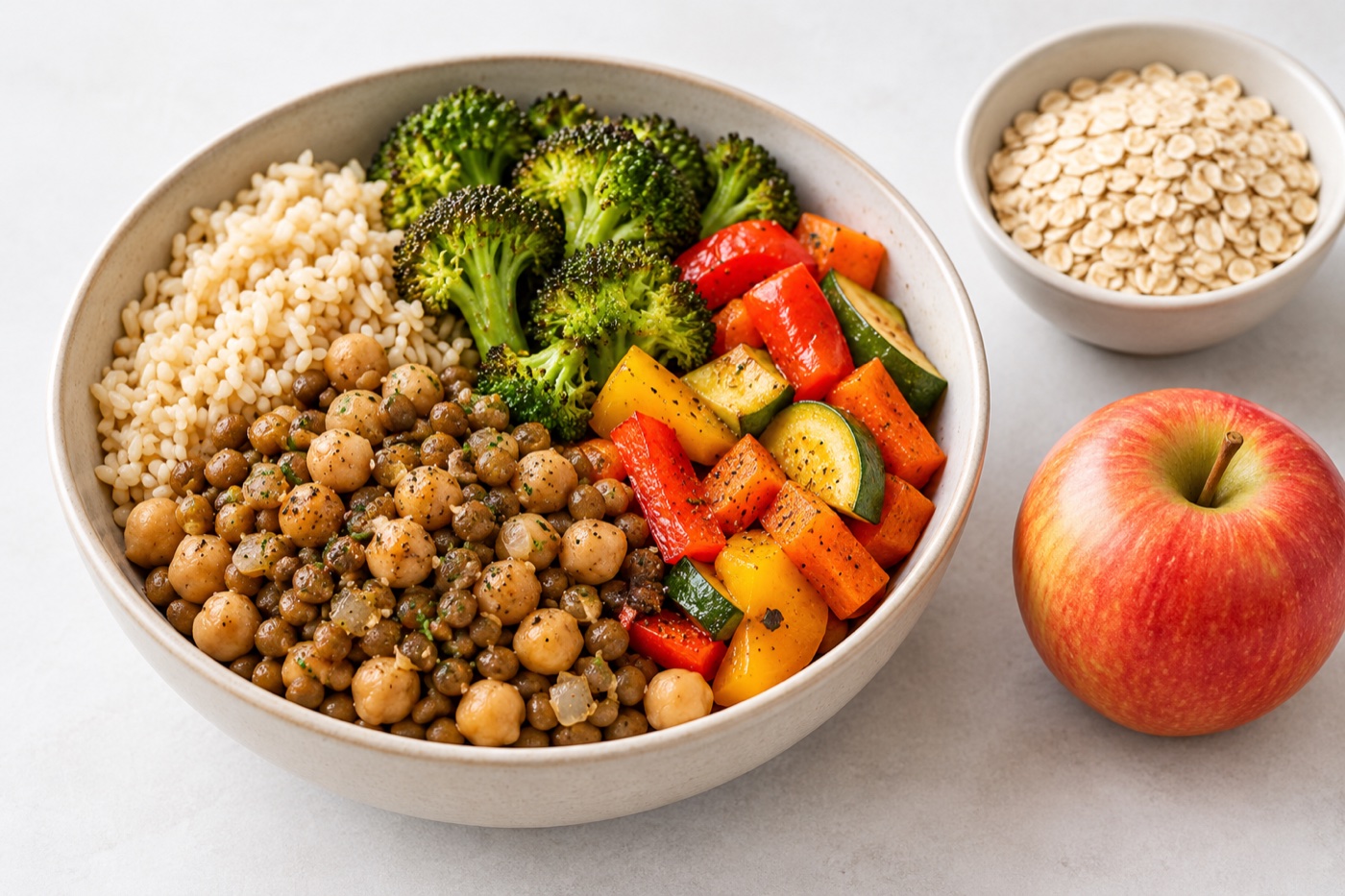
AI-generated editorial illustration.
The number nobody tracks
Open any macro tracking app and protein, carbs, and fat are front and center. Fiber is buried in a submenu, if it shows up at all. That's a problem, because only about 5% of American adults hit the recommended daily fiber intake, and the average person eats somewhere around 16 to 17 grams a day against a target of 25 grams for women and 38 for men. Meal preppers who've dialed in their macros are often worse off here than the general population, not better, because a diet built around chicken breast, rice, and egg whites can hit 180 grams of protein a day while sitting at 12 grams of fiber.
That gap doesn't show up on a scale or in a mirror right away. It shows up as bloating, irregular digestion, blood sugar crashes two hours after a "clean" meal, and a hunger that protein alone never quite satisfies.
Why protein-first prep quietly crowds out fiber
Chicken breast, egg whites, and whey have zero grams of fiber. White rice has less than a gram per cup. When your prep rotation is built around maximizing protein per calorie, you end up defaulting to the foods that make that math easiest, and those foods are almost always the ones with the least fiber. It's not a lack of discipline. It's what the spreadsheet rewards.
The fix isn't eating less protein. It's picking foods that give you both. That distinction matters because fiber and protein actually work together on satiety. Fiber slows gastric emptying and blunts the blood sugar spike from carbs in the same meal, while protein signals fullness hormones. A meal with both keeps you full longer than a meal with either alone, which is the entire point of eating well while cutting.
What 25 to 38 grams actually looks like
Fiber targets sound abstract until you map them to real food. The USDA guideline is roughly 14 grams of fiber per 1,000 calories, which on a 2,200-calorie day works out to about 30 grams. Here's what closes that gap without turning your week into a rabbit food experiment.
| Food | Serving | Fiber | Protein |
|---|---|---|---|
| Lentils, cooked | 1/2 cup | 7.8g | 9g |
| Black beans, cooked | 1/2 cup | 7.5g | 7.6g |
| Chickpeas, cooked | 1/2 cup | 6.2g | 7.3g |
| Edamame, shelled | 1/2 cup | 4g | 9g |
| Chia seeds | 1 oz (2 tbsp) | 10g | 4.7g |
| Oats, dry | 1/2 cup | 4g | 5g |
| Avocado | 1 whole | 13.5g | 4g |
| Raspberries | 1 cup | 8g | 1.5g |
Notice the pattern: legumes are the only category that stacks real fiber on top of real protein in the same bite. That's why a lentil-and-chicken bowl beats a chicken-and-rice bowl on paper even at identical calories and similar protein — you're not choosing between fiber and protein, you're getting both from one ingredient.
Building fiber into prep without adding cook time
The mistake that undoes all of it
If you've been sitting at 15 grams of fiber a day and you jump to 35 grams overnight, you will feel worse before you feel better. Gas, cramping, and bloating from a sudden fiber increase are common enough that they scare people back to their old habits within a week. Ramp up by about 5 grams every few days and drink more water as you go — fiber needs water to do its job in the gut, and without it you get the opposite of the effect you're after.
Hitting your protein number doesn't mean you're eating well if fiber is an afterthought. Build meals around legumes, keep produce skins on, and add chia or flax to what you're already making. Ramp up gradually, drink water, and the bloating and afternoon crashes usually resolve within one to two weeks.
Where this fits with tracking macros
Most tracking apps treat fiber as an afterthought, which is exactly how it gets ignored. If your planning tool only surfaces protein, carbs, and fat, fiber will keep losing to whatever maximizes the numbers you can see. A meal plan that's built with fiber as a real constraint, not just a suggestion, is the difference between a week that leaves you regular and full and one that leaves you bloated and reaching for a snack an hour after eating.
Let your meal plan handle the fiber math
Kenji builds your weekly plan around your protein target and your fiber, not just calories, so you stop guessing which meals are actually keeping you full.