
Food Storage
12 Foods You Should Never Refrigerate (Especially When Meal Prepping)
You batch-cook on Sunday, fridge everything, and by Wednesday it tastes off. Often the problem isn't the cooking, it's where things got stored. Some foods genuinely degrade in the cold: firm textures go mushy, flavours flatten, shelf life actually shrinks. Here are the 12 most common ones to keep out of the fridge.
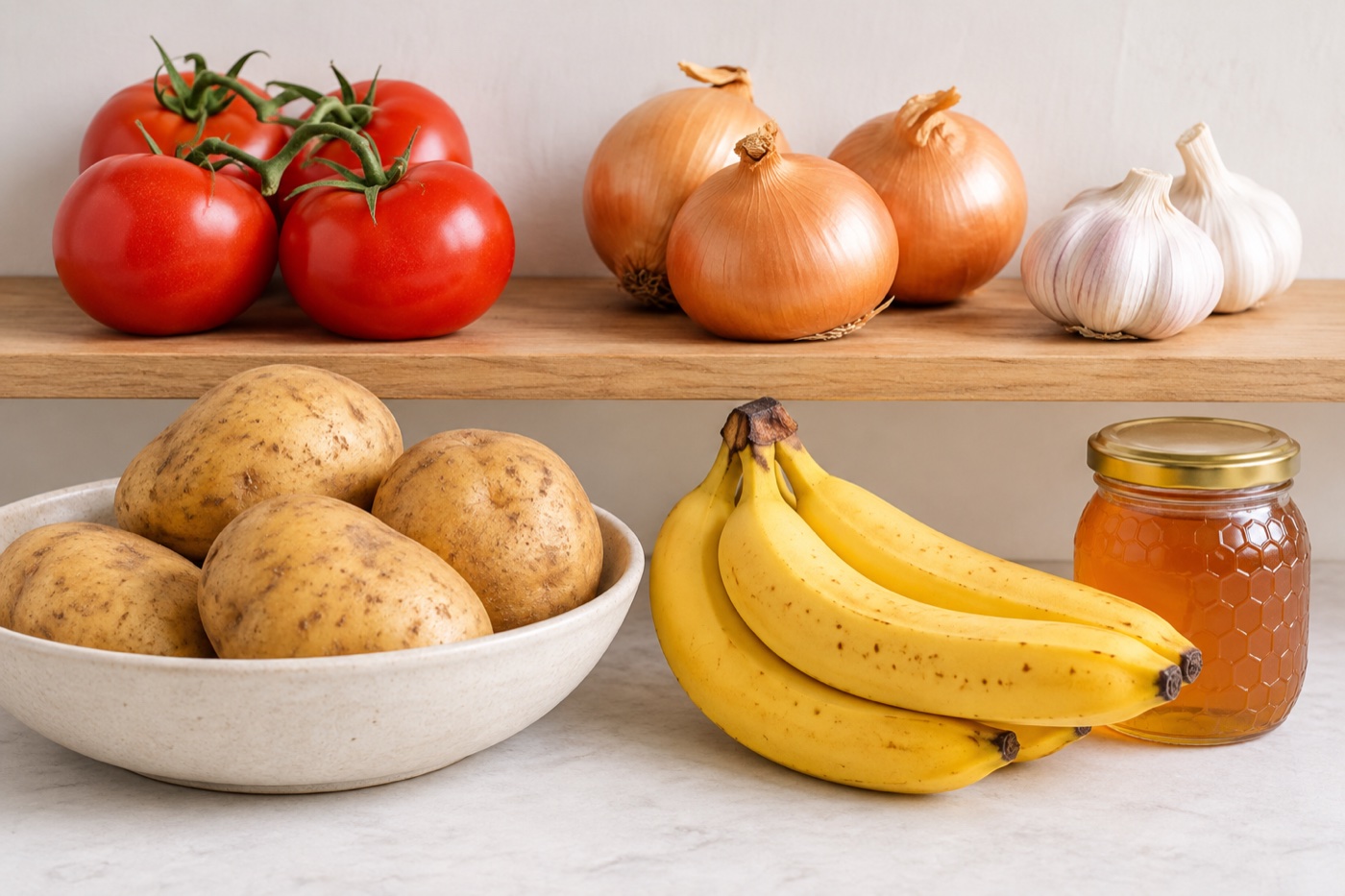
AI-generated editorial illustration.
The 12 Foods
Cold air breaks down the cell walls that keep tomatoes firm. Within 24 hours in the fridge, a ripe tomato goes mealy and loses most of its flavour. The volatile compounds that give tomatoes their bright, fresh taste evaporate rapidly below 12°C. For meal prep this is a real problem: a batch of bruschetta topping or a caprese salad can go from good to watery overnight.
Store on the counter stem-side down, away from direct sun. Use within 5–7 days.Below about 8°C, a process called cold-induced sweetening kicks in: the starch in potatoes converts to sugars, giving them a weird sweet taste and a gritty texture when cooked. They won't roast or mash well. If you're batch roasting potatoes for the week, start with room-temperature spuds, not cold ones from the fridge.
Store in a paper bag in a cool, dark cupboard. Keep away from onions, which speed up spoilage in both.Whole unpeeled onions need airflow to stay firm. In the fridge, moisture collects around them and encourages mould on the outer layers, making the inner flesh go soft and slimy. Once you've cut an onion, the rules change: wrap the halves tightly or use an airtight container and keep in the fridge, and use within 3 days.
Store whole onions in a mesh bag or open basket in a cool, dry spot.A whole garlic bulb in the fridge will sprout within a few days, and the cloves develop a bitter, slightly rubbery flavour. The moisture also encourages mould between cloves. If you pre-mince garlic for the week's cooking, the fridge is fine for that, but keep whole bulbs out.
Store whole bulbs in a small pot or mesh bag at room temperature. Use within 3–4 weeks.An unripe avocado put straight in the fridge will never ripen properly. The cold stops the enzymatic ripening process entirely. A ripe one can hold an extra day or two in the fridge, but the texture can go stringy. For meal prep, buy avocados a few days ahead and let them ripen on the counter. Only move them to the fridge the day you plan to use them.
Keep on the counter until ripe (gives slightly when squeezed). Once cut, wrap the unused half with the stone in, refrigerate, and use within 24 hours.Cold temperatures break down the cell walls in banana skin rapidly, turning it black almost overnight. The fruit inside stays edible, but the texture goes very soft and the appearance is off. An under-ripe banana in the fridge stays under-ripe forever: the ripening enzymes are cold-inactivated.
Keep in a fruit bowl away from other ripening fruit. If they ripen faster than you can eat them, peel and freeze for smoothies.Stone fruit stored in the fridge before it's fully ripe undergoes chilling injury: the flesh turns mealy and loses its juiciness, and it can't recover. Even ripe stone fruit suffers in the cold as the sugars and aromatics that make it taste good get muted. If you include fruit in your high-protein breakfasts or snacks, add stone fruit fresh rather than prepping it days ahead.
Ripen at room temperature, then eat within 1–2 days. Only refrigerate once fully ripe and you need one extra day.The fridge is one of the worst places for bread. A process called retrogradation causes the starch molecules to recrystallise faster at fridge temperatures (3–7°C) than at room temperature, making bread go stale and dry at up to twice the usual rate. For meal preppers building wraps or packed lunches for the week, storing bread in the fridge is a common error that makes everything taste dry.
Keep on the counter wrapped in a cloth or in a bread box for up to 3 days. Freeze anything beyond that and toast straight from frozen.Honey keeps at room temperature without any help: its low moisture content and natural acidity mean it doesn't spoil. Cold temperatures cause it to crystallise into a thick, grainy solid that's hard to scoop and nearly impossible to pour into dressings or marinades. There's no upside to refrigerating it.
Store in a sealed jar in the cupboard. If it crystallises, sit the jar in warm water for a few minutes to loosen it.Coffee absorbs surrounding smells and moisture, and a fridge has both. Every time you take the container in and out, condensation forms on the grounds or beans and degrades the oils that carry the flavour. It's one of those things that seems harmless but makes a noticeable difference to how a cup tastes.
Store in an airtight container in a cool, dark cupboard. Only freeze if storing for more than two weeks, in a sealed bag you won't be opening repeatedly.Cucumbers start to suffer below 10°C. The skin pits, the flesh gets watery, and they decay faster than they would at room temperature. A cucumber kept on the counter stays crisp much longer than one wedged between cold items in the fridge. For prepped salads and snack portions, store whole cucumbers separately and slice them the day you're eating them.
Keep whole cucumbers on the counter for up to a week. Once sliced, seal them in an airtight container in the fridge and use within 2 days.Olive oil solidifies and turns cloudy in the fridge. It won't go off, but you can't pour it, and it loses its smooth texture for dressings. More than that, condensation can introduce water into the bottle, which slowly affects flavour over time. Keep it somewhere easy to reach, not stuck solid in the fridge.
Store in a dark cupboard away from the stove (heat degrades it). Use within 18 months of the harvest date on the bottle.Quick Reference: Where to Store Everything
| Food | Store Here | Lasts |
|---|---|---|
| Tomatoes | Counter, stem-side down | 5–7 days |
| Potatoes | Dark cupboard in paper bag | 3–5 weeks |
| Onions (whole) | Mesh bag, cool dry spot | 4–6 weeks |
| Garlic (whole) | Pot or mesh, room temp | 3–4 weeks |
| Avocados (uncut) | Counter until ripe | 2–5 days to ripen |
| Bananas | Fruit bowl | 5–7 days |
| Stone fruit (unripe) | Counter | 2–4 days to ripen |
| Bread | Bread box or cloth wrap | 2–3 days |
| Honey | Sealed jar in cupboard | Indefinitely |
| Coffee | Airtight jar, dark cupboard | 2–4 weeks (opened) |
| Cucumbers (whole) | Counter | Up to 1 week |
| Olive oil | Dark cupboard, away from stove | 12–18 months |
Why This Matters More When You're Meal Prepping
When you cook one meal, a storage mistake affects one dinner. When you meal prep, it affects every meal of your week. Mealy tomatoes in Monday's salad, stale bread in Tuesday's wrap, and bitter garlic in Wednesday's stir-fry all trace back to the same decision made on Sunday night.
The fix is simple. Before putting anything in the fridge, ask whether it actually needs to be there. Most of the time the answer is no, and five seconds of thought saves a week of mediocre food.
A good meal plan accounts for storage naturally, timing tomato-heavy meals earlier in the week when produce is fresh, and putting sturdier fridge-stable dishes later. Kenji handles this automatically when it builds your weekly plan.
Let Kenji handle the planning for you.
Tell Kenji your goals, dietary preferences, and cooking time. It builds your full week in seconds, with recipes, macros, and a shopping list ready to go.