
Meal Prep Techniques
High-Protein Breakfast Meal Prep: What Actually Survives the Fridge and Freezer
Most breakfast meal prep guides hand you a list of 25 recipes and call it a day. Nobody mentions that half of them turn rubbery, watery, or gray by Wednesday. The problem isn't the recipe. It's that eggs, dairy, and grains all break down differently in the cold, and most people are prepping the wrong format for the protein they picked.
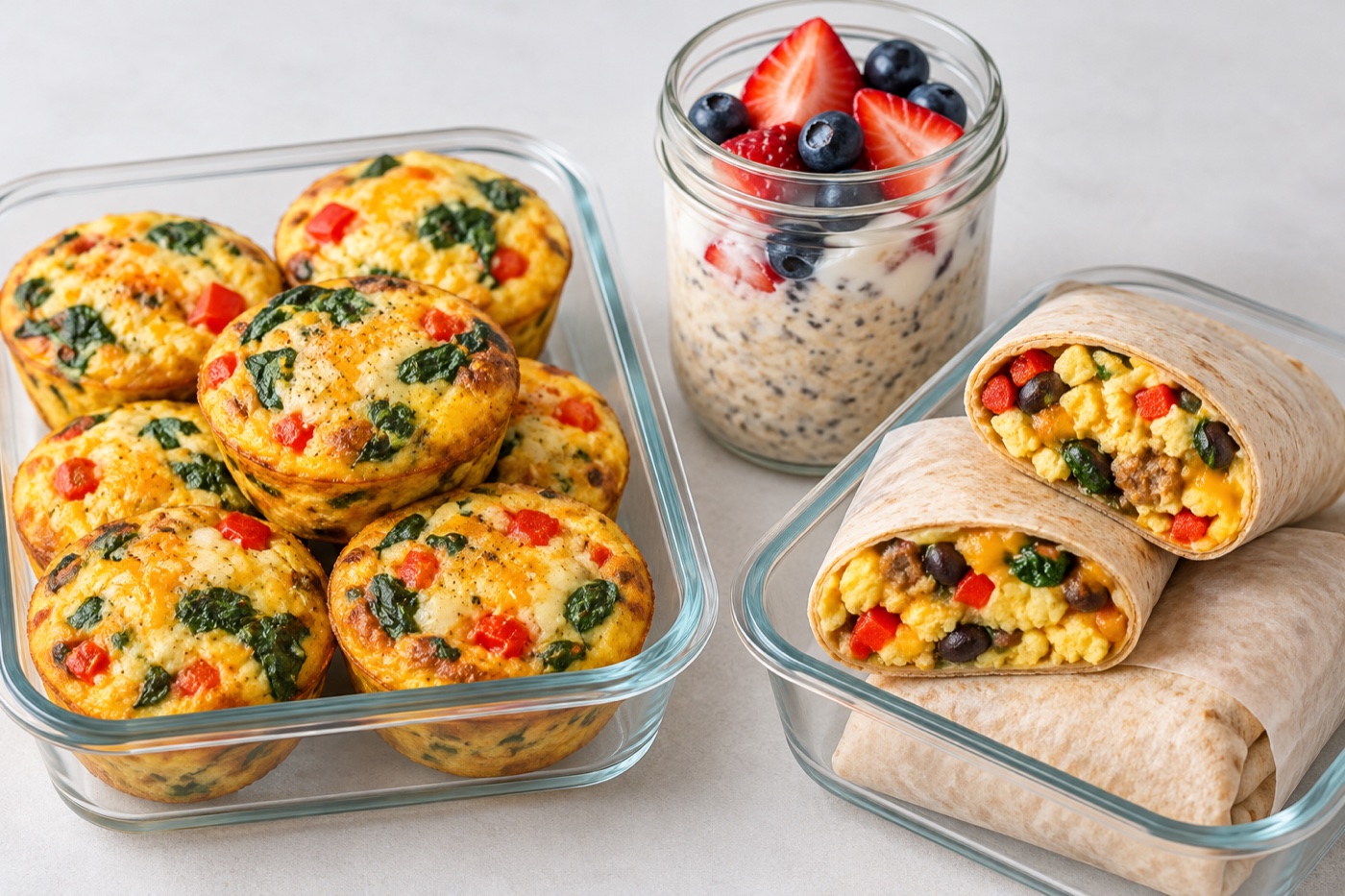
AI-generated editorial illustration.
Why 30 grams is the number that matters
The average American breakfast has somewhere between 10 and 15 grams of protein — a bowl of cereal, a bagel, maybe a single egg. That's roughly a third of what your body can actually put to use in one sitting. Most research on muscle protein synthesis puts the useful range at 25 to 40 grams per meal, and breakfast is the meal people shortchange the hardest because it's the one they're least willing to spend time on at 7 a.m.
That's the actual case for meal prepping breakfast. It's not really about saving time, though it does that too. It's about hitting a number you'd never hit standing at the counter eating toast. Once you treat 30 grams as the target instead of "something with protein in it," the recipe choices get a lot more obvious.
Why your frozen eggs turn into rubber
Here's the part nobody explains before you dump a batch of hard-boiled eggs into a freezer bag. Eggs are mostly water, and when water freezes it forms ice crystals that physically tear through the protein structure holding the egg together. When it thaws, that structure doesn't reassemble — the water and protein separate, and you get the rubbery, slightly weeping texture that ruins a lot of people's first attempt at egg meal prep.
Whole hard-boiled eggs and egg whites take the worst of it, because they don't have enough fat to buffer the damage. Egg whites specifically go tough and squeaky. Scrambled eggs, frittatas, and baked egg casseroles hold up dramatically better, because the eggs are already broken down and mixed with fat, dairy, or vegetables before freezing — there's no intact structure left to tear apart. That's the actual rule: if it's whole and intact, don't freeze it. If it's scrambled, baked, or mixed into something, it freezes fine.
Cottage cheese vs. Greek yogurt: the protein math
These get treated as interchangeable in most breakfast content, and they're close, but not identical. Low-fat cottage cheese runs about 12 grams of protein per 100 grams. Nonfat Greek yogurt runs closer to 10 to 11. Cottage cheese wins on protein density, and its protein leans casein — a slow-digesting protein that's genuinely useful if you're eating breakfast at 6 a.m. and not eating again until noon.
The tradeoff is sodium. Cottage cheese typically runs 300 to 400mg per 100 grams; Greek yogurt is much lower. If you're watching sodium for any reason, that's the one to know. Neither should be frozen — both break and turn grainy and watery once thawed, so treat them as fridge-only, made no more than 4 to 5 days ahead.
| Base | Protein / 100g | Freezes well? |
|---|---|---|
| Cottage cheese | ~12g | No — fridge only |
| Greek yogurt (nonfat) | ~10–11g | No — fridge only |
| Baked egg casserole | ~15–21g per serving | Yes — up to 3 months |
| Whole hard-boiled egg | ~6g per egg | No — texture breaks down |
Building an actual 30-gram breakfast
Once you know which formats hold up, the combinations basically build themselves. A cottage cheese egg bake lands around 21 grams per serving on its own — pair it with a piece of fruit and you're close to 25. A cup of cottage cheese with a quarter cup of slivered almonds gets you to roughly 34 grams without turning on the stove at all. Quinoa overnight oats made with milk and a scoop of yogurt run about 24 grams; add a tablespoon of peanut butter and you're past 30.
Breakfast meatballs — ground turkey or chicken formed and baked ahead — come in around 26 grams per serving and freeze exceptionally well, since they're already a fully cooked, mixed protein rather than something whole and delicate. Overnight chia pudding made with protein powder or Greek yogurt can clear 30 grams on its own, and it's one of the few make-ahead breakfasts that actually improves with a day or two in the fridge as it thickens.
A batch-cooking schedule that doesn't leave you eating rubber by Thursday
The mistake most people make is treating breakfast prep like a single event: cook everything Sunday, eat it cold all week. That works for casseroles and meatballs. It does not work for anything dairy-based, which degrades faster than it looks.
Freeze anything baked, scrambled, or formed into a patty — casseroles, egg muffins, meatballs. Keep anything dairy-based (cottage cheese, yogurt, chia pudding) in the fridge only, and rebuild it midweek instead of prepping a full week at once.
The mistake that ruins otherwise good prep
The most common failure isn't a bad recipe, it's format mismatch — someone finds a hard-boiled egg meal prep video, batches a dozen eggs, freezes them because that seems efficient, and ends up with rubber. Or they make a big batch of cottage cheese bowls on Sunday, and by Friday the texture's broken down into something watery and unappetizing. Matching the protein to the right storage method is the entire skill here. Get that right and the actual cooking part is easy.
Let Kenji hit your protein target automatically
Kenji builds your meal plan around your macros, including breakfast, so you're not guessing whether a recipe gets you to 30 grams or falls short.