
Nutrition
High-Protein Snacks Worth Buying (Most Protein Bars Aren't One of Them)
A Gatorade Protein Bar has 29 grams of sugar. A Snickers has 33. That's a four-gram gap between something marketed as sports nutrition and something sold next to the gum at checkout. Most of what's labeled "high-protein" on a shelf today is closer to dessert than to food that actually helps you hit your numbers, and the label is designed to make that hard to notice.
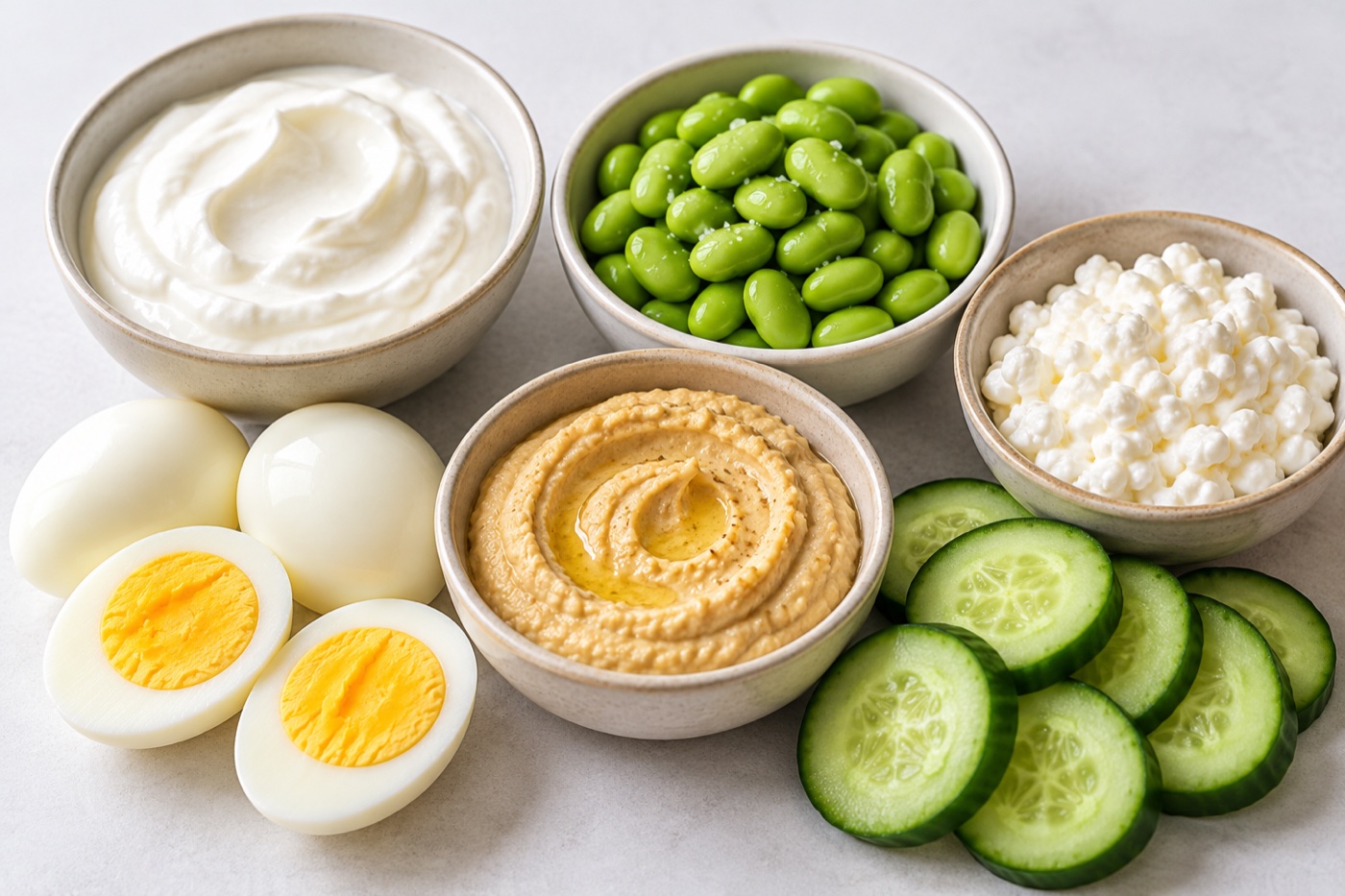
AI-generated editorial illustration.
The ratio nobody prints on the front of the package
Grams of protein is the number brands want you to see. It's not the number that tells you whether a snack is actually good. What matters is how many calories you're paying for each gram of protein you get — call it the protein-to-calorie ratio. A snack in the 10-to-12-calories-per-gram range is doing real work. Anything past 15 to 20 calories per gram is mostly filler wearing a protein label.
Run the math on a Clif Bar: 10 grams of protein, 260 calories. That's 26 calories for every gram of protein — worse than a bowl of oatmeal, and nowhere close to what the "protein" claim on the wrapper implies. Compare that to two hard-boiled eggs: roughly 12 grams of protein for about 140 calories, or 11.7 calories per gram. Same protein number, completely different snack.
This matters more the tighter your calorie budget gets. If you're eating in a deficit and trying to hit 140 grams of protein a day on 1,800 calories, every snack that runs a bad ratio eats into the room you have left for actual meals. Pick two bad-ratio snacks a day and you can burn 500 to 600 calories getting maybe 25 grams of protein out of it — protein you could've gotten from a cup of cottage cheese for a third of the calories. There's no regulation forcing better math, either. The FDA doesn't set a minimum protein-to-calorie ratio for a product to say "high protein" on the front — it just requires the number on the label be accurate, which is a much lower bar than most people assume.
38% of "high-protein" snacks are candy with better PR
A recent survey of 83 snacks marketed as high-protein found that chocolate was the actual first ingredient in 38% of them — meaning the base product is a candy bar with protein powder stirred in, not the other way around. That's not an accident. Bars need something to bind and sweeten the protein powder, and sugar is cheaper than the alternatives.
This is also why a lot of these bars need 300-plus calories to hit 20 grams of protein. Whey powder alone gets you there in under 130 calories. The other 170-plus calories are chocolate coating, syrup, and oil — and none of it shows up in the headline number brands put in size-48 font on the front of the wrapper.
This isn't just a nutrition-nerd complaint anymore, either. There's been a wave of lawsuits over the last two years accusing bar makers of exactly this — burying sugar and cheap fillers behind a protein claim that's technically true but practically misleading. None of that changes what's already on shelves. It just means you can't outsource the judgment call to the front of the package. You have to flip it over.
Divide the calories by the grams of protein. Under 12 is a real protein snack. Between 12 and 15 is fine in a pinch. Over 15, you're mostly paying for sugar and calling it recovery food.
What actually delivers, in real numbers
Whole foods beat almost every packaged bar on this math, and they're usually cheaper too. Here's how the common options stack up per typical serving:
| Snack | Protein | Calories | Cal/gram protein |
|---|---|---|---|
| Low-fat cottage cheese (1 cup) | 25g | 163 | 6.5 |
| 2 hard-boiled eggs | 12g | 140 | 11.7 |
| Beef jerky (1 oz) | 9g | 82 | 9.1 |
| Whey protein shake (1 scoop) | 25g | 120 | 4.8 |
| Edamame, shelled (1 cup) | 17g | 189 | 11.1 |
| Nonfat Greek yogurt (1 cup) | 23g | 146 | 6.3 |
| Tuna pouch (2.6 oz) | 16g | 70 | 4.4 |
| Average "protein" bar | 18g | 280 | 15.6 |
Cottage cheese wins by a wide margin, which is part of why it's had such a loud comeback online. It's bland enough that people either love it or can't get past the texture — but the numbers are hard to argue with. Tuna pouches are the sleeper pick here: shelf-stable, no fridge required, and a better ratio than almost anything with a wrapper and a marketing budget. The only real downside is eating tuna out of a foil pouch at your desk, which is a social cost, not a nutritional one.
Digestion speed is worth knowing too, even if it rarely gets mentioned next to the protein count. Whey and egg whites absorb fast, which makes them a solid pre- or post-workout choice. Cottage cheese is mostly casein, which digests slowly and is closer to ideal right before bed, since it keeps feeding your muscles amino acids for hours while you sleep instead of all at once.
The cost side nobody mentions
Protein bars run $2 to $3.50 each and deliver protein at roughly $0.15 to $0.25 per gram once you account for how inefficient the ratio is. Cottage cheese, at around $5 for a two-pound tub, comes out to about $0.065 per gram of protein. Bulk whey protein lands between $0.08 and $0.12 per gram. Eggs are the actual value champion — close to 24 grams of protein per dollar, which is hard for any packaged snack to touch.
If you're eating two or three snacks a day and grabbing a bar each time, you're spending real money — easily $150 to $250 a month — on a product that's mathematically worse than food you could portion out of your own fridge for a fraction of the price. Swap even half of those for cottage cheese or eggs and you're looking at savings in the range of $60 to $100 a month, plus a better ratio every time.
How much protein a snack actually needs to have
You don't need to max out every snack. Research on muscle protein synthesis points to a threshold around 25 to 30 grams of high-quality protein to get the full stimulus from a single sitting — but that's the number for a meal, not a snack. A snack's job is different: hold you over, keep you out of the vending machine, and chip away at your daily total. Ten to 15 grams between meals does that fine. You're not wasting anything by not hitting 30 grams at 3pm.
Where people get it backwards is assuming more snacks automatically means more muscle or more fat loss. It doesn't. What moves the needle is your total protein for the day, usually landed on through your actual meals. Snacks are just the easiest place to make up a shortfall without much planning.
Building a stash that survives an actual week
The reason people default to bars isn't taste, it's convenience — a bar doesn't need refrigeration, portioning, or a spoon. But a 20-minute prep session on Sunday closes most of that gap. Hard-boil a dozen eggs and they're good in the shell for a week; peel a few each morning if you don't want the smell in your fridge for the whole batch. Portion cottage cheese into 4-ounce containers so it's grab-and-go instead of a tub you have to measure out. Keep a bag of frozen shelled edamame — three minutes in the microwave and it's a snack that beats almost every bar on the shelf. And a pre-measured shaker bottle of whey sitting in your bag solves the "nothing to eat, again" problem better than a $3 bar ever will, for about 60 cents.
For desk drawers and glove compartments where refrigeration isn't an option, tuna pouches and jerky are the two that hold up without going bad, and both still beat the ratio on most bars sitting next to them at the gas station. Keep two or three of those stashed wherever you get caught without a plan, and the "I'll just grab a bar" moment stops being your only option.
None of this requires eating boring food forever. It just means treating "high-protein" on a label as a claim to verify, not a reason to buy.
Snacks add up faster than meals
Kenji builds your protein and calorie targets around your actual day — meals and snacks included — so you're not guessing whether that bar is worth it.