
Nutrition
High-Protein Vegetarian Meal Prep, Without the Powder
Most “high-protein vegetarian” recipes online cap out around 12 grams a serving — barely more than a glass of milk. If you're prepping meatless meals to actually hit 30 or more grams per sitting, you need a different playbook than the recipe blogs are giving you.
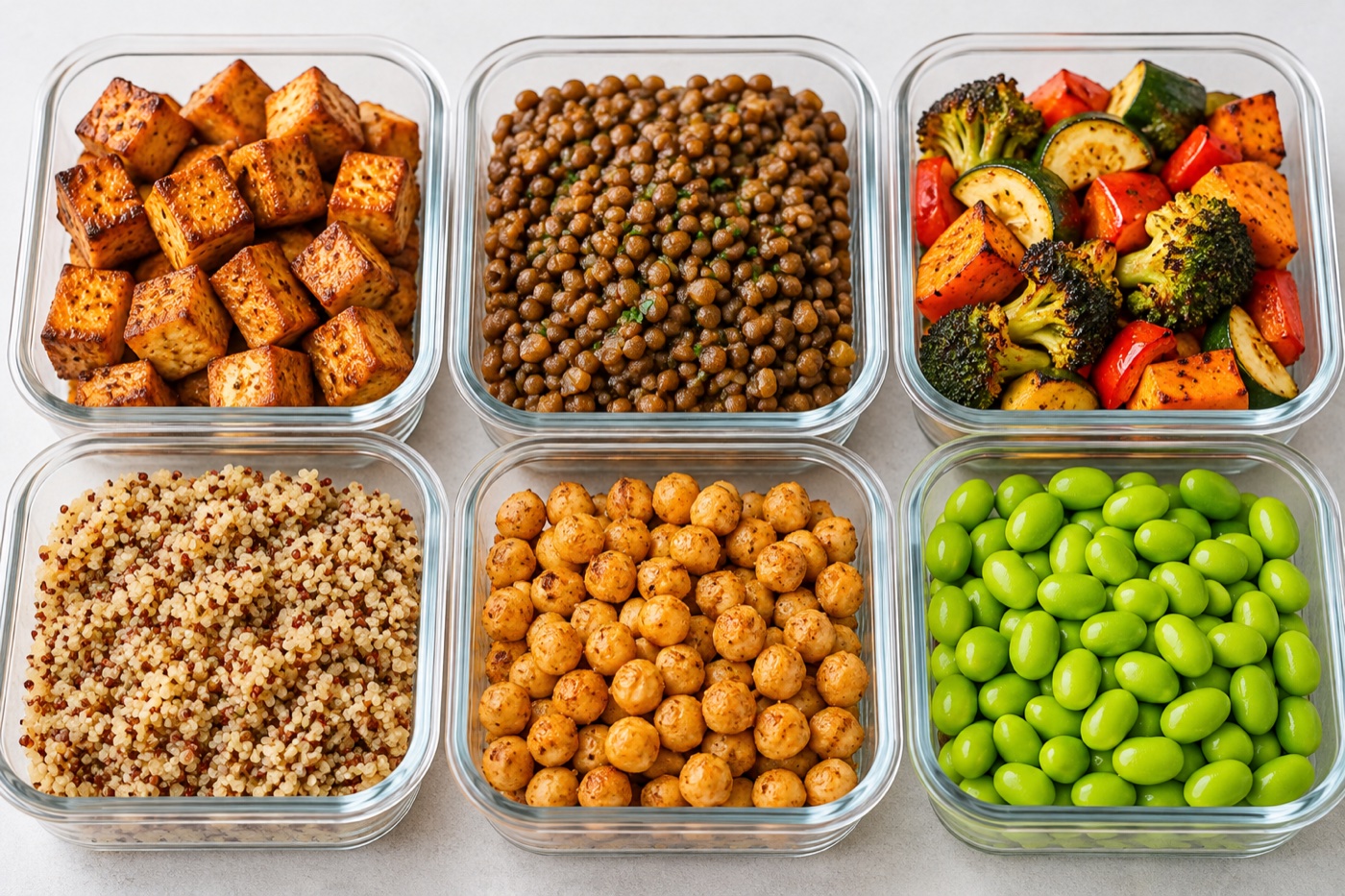
AI-generated editorial illustration.
The "protein combining" advice you can ignore
For decades, vegetarian cookbooks pushed the idea that you had to pair rice with beans, or hummus with pita, at the same meal to get a "complete" protein — otherwise your body couldn't use it. This is wrong, and it's been wrong since researchers debunked it back in the 1990s. Your liver keeps a rotating pool of amino acids on hand and draws from it across the day, not just within a single meal. Eat lentils at lunch and quinoa at dinner and your body combines them just fine on its own timeline.
The reason this matters for meal prep: you can stop overengineering single bowls to be "complete" and just focus on hitting a total protein number for the day, spread across whatever combination of tofu, beans, eggs, and dairy you actually feel like batch cooking. That's one less constraint on your Sunday prep session.
The sources actually worth batch cooking
Not all plant proteins pull their weight per calorie. A cup of black beans gets you about 15 grams of protein for 220 calories — fine, but not efficient. Compare that to the sources below, which is where most of your prep should be concentrated if the goal is protein density, not just "plant-based."
| Source | Protein | Notes |
|---|---|---|
| Tempeh | 31g per cup | Denser and higher-protein than tofu; holds up better to reheating |
| Extra-firm tofu | 12–20g per 3.5 oz | Press it for 20+ minutes before cooking or it steams instead of browning |
| Lentils (cooked) | 18g per cup | Cook once, use in bowls, soups, and salads all week |
| Cottage cheese | ~25g per cup | Underrated — most of that is slow-digesting casein |
| Greek yogurt (plain) | ~20g per cup | Works as a base for sauces, not just breakfast |
| Eggs | 6g each | Cheapest protein per gram on this list, hard to beat for cost |
Notice cheese isn't on here as a primary source. An ounce of cheddar gets you 7 grams of protein and 9 grams of saturated fat — it's a garnish, not a protein strategy, even though it feels like one.
The real obstacle isn't protein, it's texture
Here's what actually derails high-protein vegetarian meal prep: by day three, tofu turns spongy and bland, tempeh gets a slightly bitter edge, and bean dishes go mushy. This is a texture and moisture problem, not a nutrition problem, and it's solvable with a few adjustments most recipe blogs skip.
The leucine problem nobody mentions
If you're prepping vegetarian meals specifically to build or maintain muscle, there's a real gap worth knowing about. Muscle protein synthesis gets triggered by hitting roughly 2.5–3 grams of leucine in a sitting — easy with 25–30 grams of whey or chicken. Most plant proteins are lower in leucine per gram, so you generally need a bigger portion to trigger the same response. Soy is the exception; it's a complete protein with a leucine profile close to animal sources, which is part of why tofu, tempeh, and edamame do more work per meal than beans or grains.
Practically: if you're relying on lentils or chickpeas as your main protein at a meal, aim for a bigger portion — 1.5 cups instead of 1 — or pair them with an egg or Greek yogurt to close the gap. This isn't a reason to avoid plant proteins; it's a reason to portion them differently than you would meat.
A prep template that actually hits 30+ grams a meal
Skip trying to invent a new recipe every week. Batch cook a base, a protein, and a sauce separately, then assemble bowls as needed:
Base (cook once): 2 cups dry quinoa or farro, cooked and portioned into 4–5 containers.
Protein (cook once): 2 blocks of pressed, roasted tofu or tempeh (about 700 grams), plus a dozen hard-boiled eggs for variety.
Vegetables: Whatever roasts well and doesn't turn to mush — broccoli, bell peppers, cherry tomatoes added fresh, not roasted.
Sauce, stored separately: tahini-lemon, peanut-lime, or a simple soy-vinegar dressing.
One bowl built from this — a cup of quinoa, 150 grams of roasted tofu, and a side of tahini sauce — lands around 32 grams of protein. Swap in cottage cheese on the side and you're closer to 40.
Stop worrying about combining proteins in one meal — your body handles that automatically. Focus your prep time on tempeh, tofu, lentils, eggs, and Greek yogurt, cook them dry (roasted, not boiled), store sauce separately, and portion plant proteins slightly larger than you would meat to close the leucine gap.
The mistake that wastes the most prep time
The single biggest failure mode is treating cheese, hummus, or nut butter as the protein anchor of a meal instead of a supporting player. A tablespoon of peanut butter has 4 grams of protein and 95 calories — it's a good add-on, a bad centerpiece. If a bowl's protein count depends on garnishes rather than a real portion of tofu, tempeh, lentils, or eggs, it's going to fall short of what the label promised, and you'll end up hungry two hours later wondering why.
Let Kenji handle the protein math
Kenji builds your weekly meal plan around your protein targets automatically — tofu, tempeh, lentils, and all — so you're not doing this arithmetic by hand every Sunday.