
Meal Planning
How to Build a Weekly Meal Plan in 10 Minutes
Most people over-complicate meal planning. They open a blank spreadsheet, stare at it, give up, and order takeaway by Tuesday. The problem isn't motivation, it's the process. Here's a system that takes 10 minutes, holds up through a real week, and gets faster every time you do it.
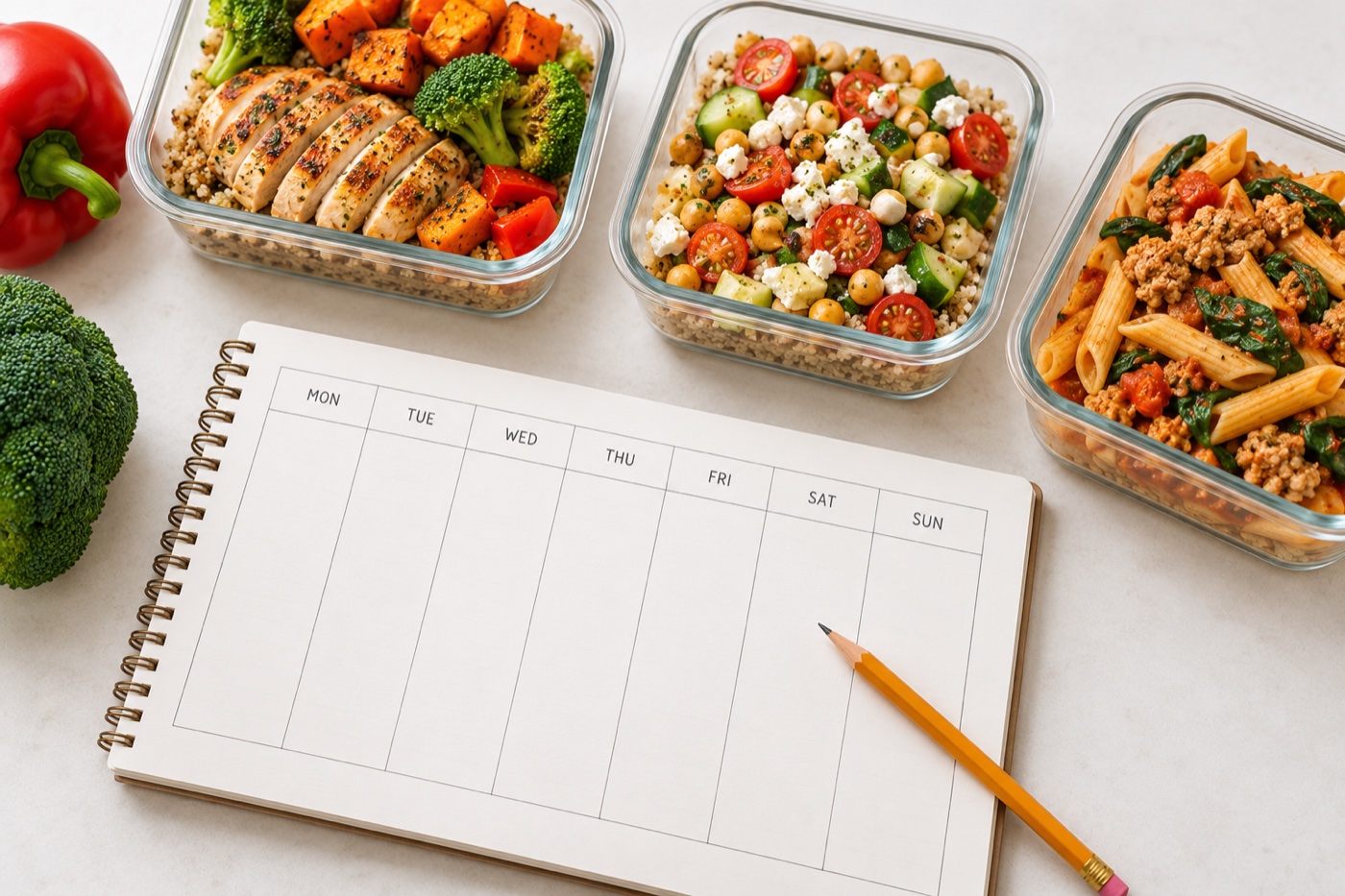
AI-generated editorial illustration.
Two Decisions to Make Before You Start
Everything else flows from these. Skip them and you end up with a list of recipes rather than an actual plan.
1. What's your goal this week? Weight loss, muscle gain, maintenance, or just eating better? Your goal sets your calorie target and macro split. You don't need to be precise here. High protein for muscle: aim for around 1.6–2.2g of protein per kg of bodyweight. Weight loss: roughly a 300–500 calorie daily deficit. Maintenance: eat to your TDEE.
2. How many meals do you actually need to cover? Be honest about it. If you eat out once a week and get lunch at work on Fridays, you need 4 dinners and 4 lunches, not 7 of each. Planning fewer meals and actually following through beats planning 7 and abandoning the whole thing by Wednesday.
The 7-Step Process
Before picking a single recipe, look at what you already have. Note any proteins, vegetables, or grains that need using up. Build at least one or two meals around these. It cuts waste and typically shaves 10–20% off the grocery bill without any extra effort.
Choose one or two main proteins for the week: chicken, salmon, eggs, beef mince, tofu, whatever fits your budget and goals. Batch-cooking a single protein and using it across multiple meals saves a lot of time and money. Shredded chicken becomes a taco on Monday, a grain bowl on Wednesday, and a soup on Friday. Same prep session, three different meals.
Choose 4–5 dinners for the week. Two should produce leftovers worth keeping (a big stew, a sheet pan of chicken). One should be genuinely fast, under 20 minutes, for the night you're exhausted and have no patience. Write them down and move on. Don't aim for perfect, aim for realistic.
This is the biggest time-saver in the system. Monday's chilli becomes Tuesday's lunch. Wednesday's traybake chicken becomes Thursday's salad bowl. You're not cooking more, you're portioning more. This removes the need to plan and cook separate lunches for most of the week, which is where a lot of people burn out on prep.
Breakfast on a weekday morning should take zero decision-making. Pick one or two options and repeat them: overnight oats (batch five jars Sunday), Greek yogurt and fruit, eggs on toast. If you're chasing a protein target, make this the easiest high-protein thing you'll actually eat. Variety at breakfast is overrated. Reliability is what matters.
Go through each meal and list what you don't already have. Group by section: produce, protein, dairy, dry goods. Cross off anything you already have from the fridge audit. A categorised list cuts 15–20 minutes off a shop and stops you forgetting one thing that derails a meal mid-week.
Mark two evenings in the plan as open: a leftover night, a takeaway, eggs on toast, whatever. Life happens. If you plan seven rigid dinners and one evening goes wrong, the whole plan feels like it failed. If you had a flex slot and used it, the plan worked. Flex nights aren't a cop-out, they're how plans survive contact with a real week.
Fridge audit → protein anchor → 4–5 dinners → lunches from leftovers → batch breakfast → categorised grocery list → 2 flex nights. Gets faster every week as the decisions become routine.
Hitting Your Macros Without Obsessing Over Every Gram
If you're tracking macros, the process above stays the same. Add one filter when picking meals: does this roughly hit my protein target? You don't need to calculate every gram upfront. A chicken breast (around 30g protein), Greek yogurt (15g), two eggs (12g), and a tin of tuna or sardines (25g) covers most people's daily target if spread across meals.
The mistake people make is planning meals without checking their protein contribution. A salad with olive oil dressing might be 8g of protein, which is fine, but only if the rest of the day makes up for it.
A Sample Week (2,000 kcal, ~150g Protein)
| Day | Breakfast | Lunch | Dinner |
|---|---|---|---|
| Mon | Overnight oats + protein | Chicken grain bowl (leftover) | Sheet pan chicken thighs + veg |
| Tue | Greek yogurt + berries | Leftover chicken + rice | Turkey mince chilli |
| Wed | Overnight oats | Chilli (leftover) | Salmon + sweet potato |
| Thu | Eggs + toast | Smoked salmon wrap | Chicken stir-fry |
| Fri | Greek yogurt | Stir-fry leftovers | 🔀 Flex |
| Sat | Eggs, any style | Open | Cook something different |
| Sun | Protein pancakes | Leftovers | 🔀 Flex |
What Kenji Does Differently
The system above works well. But it still takes decisions: which meals hit your macros, which ingredients overlap to cut down on shopping, how to balance variety against simplicity. That's a real cognitive load to carry every Sunday.
Kenji handles all of it automatically. Give it your calorie target, protein goal, diet preferences, budget, and how much time you want to spend cooking. It builds the whole week in seconds: meals, macros, shopping list, batch-cooking overlaps already sorted. The 10-minute process becomes closer to 10 seconds.
Let Kenji handle the planning for you.
Tell Kenji your goals, dietary preferences, and cooking time. It builds your full week in seconds, with recipes, macros, and a shopping list ready to go.