
Food Storage
How to Freeze Meal Prep So It Actually Tastes Good Later
Food kept at 0°F is safe to eat indefinitely. Not for months — indefinitely. So why does that chicken and rice you froze in March taste like the inside of the freezer? Because freezing was never a safety problem. It's a texture problem, and almost every guide skips the part that actually matters.
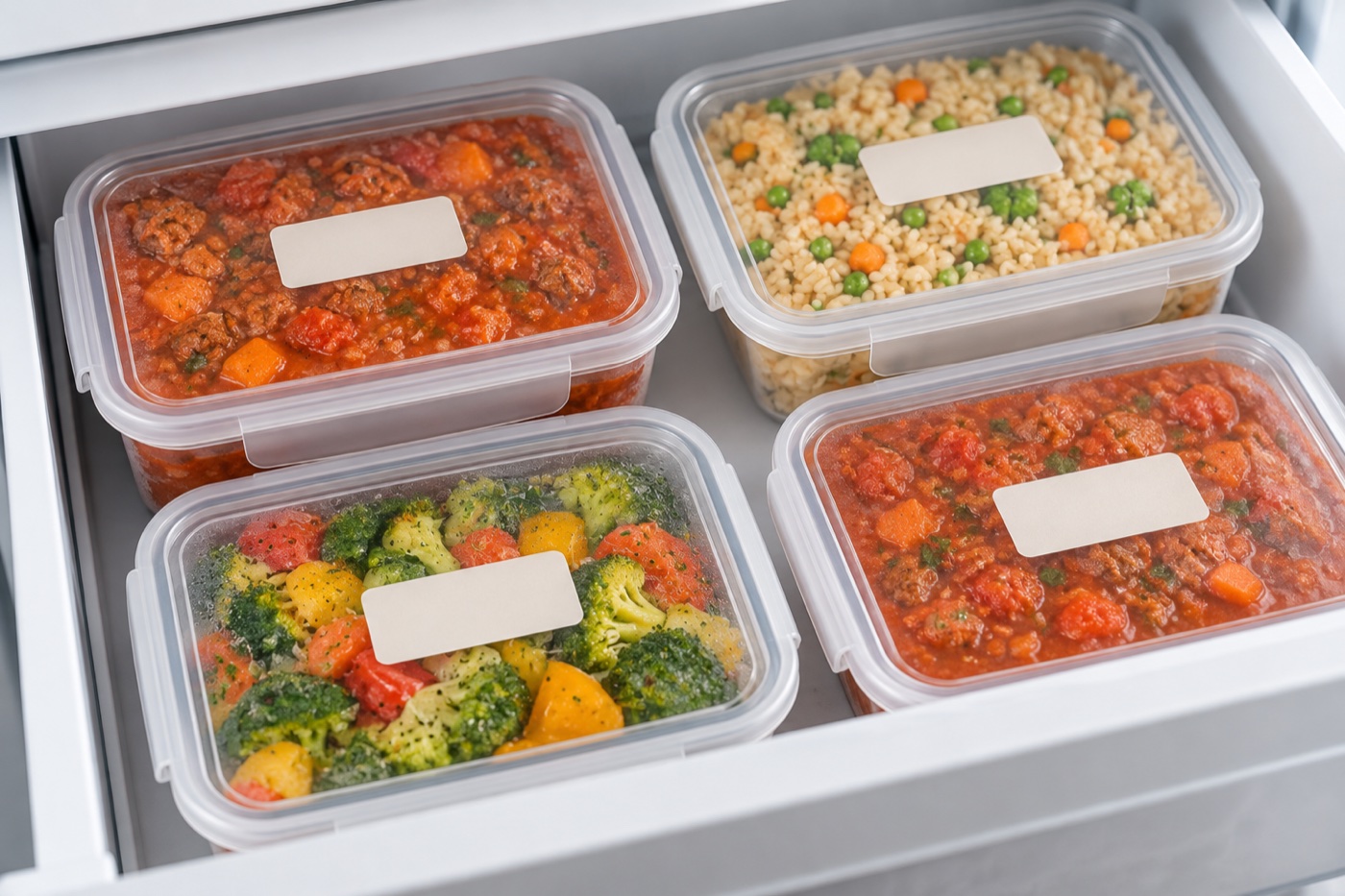
AI-generated editorial illustration.
Safety and quality are two different clocks
The USDA is unambiguous about this: at 0°F (-18°C), bacteria can't grow, so frozen food never becomes unsafe. Every date you see on a freezer chart is a quality window, not an expiration. For prepared meals, that window is about 3–4 months. Soups, stews, and cooked leftovers hold their best quality for 2–3 months. Past that, nothing dangerous happens — the food just slowly gets worse. Drier, blander, more "freezer-tasting."
This changes how you should think about freezer meal prep. You're not racing a safety deadline. You're fighting two slow physical processes: dehydration and oxidation. Win those two fights and a meal frozen in week one tastes nearly identical in week ten. Lose them and you get freezer burn — those gray, leathery patches where ice crystals pulled moisture out of the surface of the food and air did the rest.
Freezer burn is an air problem, not a cold problem
Here's the thing most people get backwards: your freezer being cold isn't what ruins food. Air is. Freezer burn happens when the surface of food is exposed to air inside the packaging — moisture sublimates off the food, oxygen dulls the flavor, and you end up with tuna that tastes like cardboard.
The fix is embarrassingly simple: remove the air. A freezer bag with every bit of air pressed out beats an expensive container that's half empty, because that empty half is full of air sitting directly on your food. Vacuum sealing is the gold standard, but you don't need one — the water displacement trick (lower the open bag into a bowl of water, let pressure push the air out, seal at the top) gets you 90% of the way there for free.
Temperature still matters, just not the way you'd think. A colder freezer freezes food faster, and faster freezing produces smaller ice crystals. Small crystals do less damage to cell walls, which means less moisture loss when you reheat. That's the real reason restaurant blast-frozen food tastes better than home-frozen: it froze in minutes, not hours. You can steal some of that advantage by freezing food flat in bags — a 1-inch slab freezes several times faster than a deep quart container.
What survives the freezer — and what doesn't
Some foods come back from the freezer nearly perfect. Others fall apart no matter how well you pack them. Most freezer meal guides pretend everything freezes fine, which is how people end up with curdled cream sauce and mushy potatoes and conclude freezer prep "isn't for them."
| Food | Verdict | The trick |
|---|---|---|
| Cooked chicken, beef, pork | Excellent | Freeze in sauce or broth — the liquid shields it from air |
| Rice | Very good | Cool fast, freeze fast. Reheats better from frozen than from the fridge |
| Soups, stews, chili, curries | Excellent | The ideal freezer meal. Freeze flat in bags |
| Pasta | Decent | Cook 1–2 minutes short of al dente; skip small shapes like orzo |
| Potatoes (chunks) | Poor | High water content turns grainy. Mash them instead — mash freezes well |
| Cream and dairy sauces | Poor | Fat separates and curdles. Freeze the base, add dairy when reheating |
| Raw watery veg (cucumber, lettuce) | Never | Ice crystals destroy the cells. There is no trick |
The pattern is water. Foods with high free-water content get wrecked by ice crystal formation; dense, saucy, fatty foods sail through. That's why a beef chili tastes just as good in month three while a "freshly frozen" side salad was dead on arrival.
The cool-fast, freeze-flat method
Thawing is where good meals go to die
You did everything right and then thawed the bag on the counter all day. That's the one genuinely unsafe move in this whole process — the outside of the food spends hours in the bacterial danger zone while the middle is still frozen. Thaw in the fridge overnight, in cold water if you're in a hurry, or go straight from frozen to pan for soups and stews. Then reheat to 165°F, actually hot, not lukewarm-in-the-middle.
Reheating is also where you repair the freezer's damage. Frozen food loses moisture; give it back. A splash of water or broth over rice before microwaving, a knob of butter stirred into reheated mash, cream added to the curry only now — these 10-second moves are why some people's frozen meals taste homemade and others taste like airline food.
Frozen food is safe forever at 0°F — you're only fighting texture. Cool food fast and uncovered, pack it flat with the air pressed out, portion it small, label it, and eat it within 2–3 months for peak quality. Skip cream sauces, chunk potatoes, and watery vegetables. Add moisture back when you reheat.
Why the freezer beats the fridge for most preppers
Fridge meal prep has a hard ceiling: 3–4 days of quality, which means cooking every weekend, forever. The freezer removes that ceiling. Cook a triple batch of chili once and you've stocked six meals with maybe 15 extra minutes of packing work. Do that with three different recipes over three weekends and you have an 18-meal library — enough that "I don't feel like cooking" stops being a delivery-app moment and becomes a 6-minute reheat.
The honest downside is variety planning. Freezing the same recipe six times means eating the same recipe six times, so the freezer rewards people who plan a rotation instead of winging it. Batch what freezes brilliantly — stews, curries, chili, cooked grains, shredded chicken in sauce — and keep fresh, crunchy things as 5-minute sides you make day-of. That split, frozen base plus fresh finish, is the closest thing meal prep has to a cheat code.
Stock your freezer with a plan, not leftovers
Kenji builds your weekly meal plan around batch-friendly recipes that freeze well, matched to your macros and budget — so every cook fills your freezer with meals you'll actually want to eat.