
Budget Cooking
Meal Prep on a $50 Grocery Budget: What Actually Fits the Cart
The average restaurant meal in the US runs about $16. A week of lunches and dinners built around lentils, chicken thighs, and eggs can come in under $3.50 a plate — and that's without clipping a single coupon. The gap isn't luck. It's four ingredients doing almost all the work.
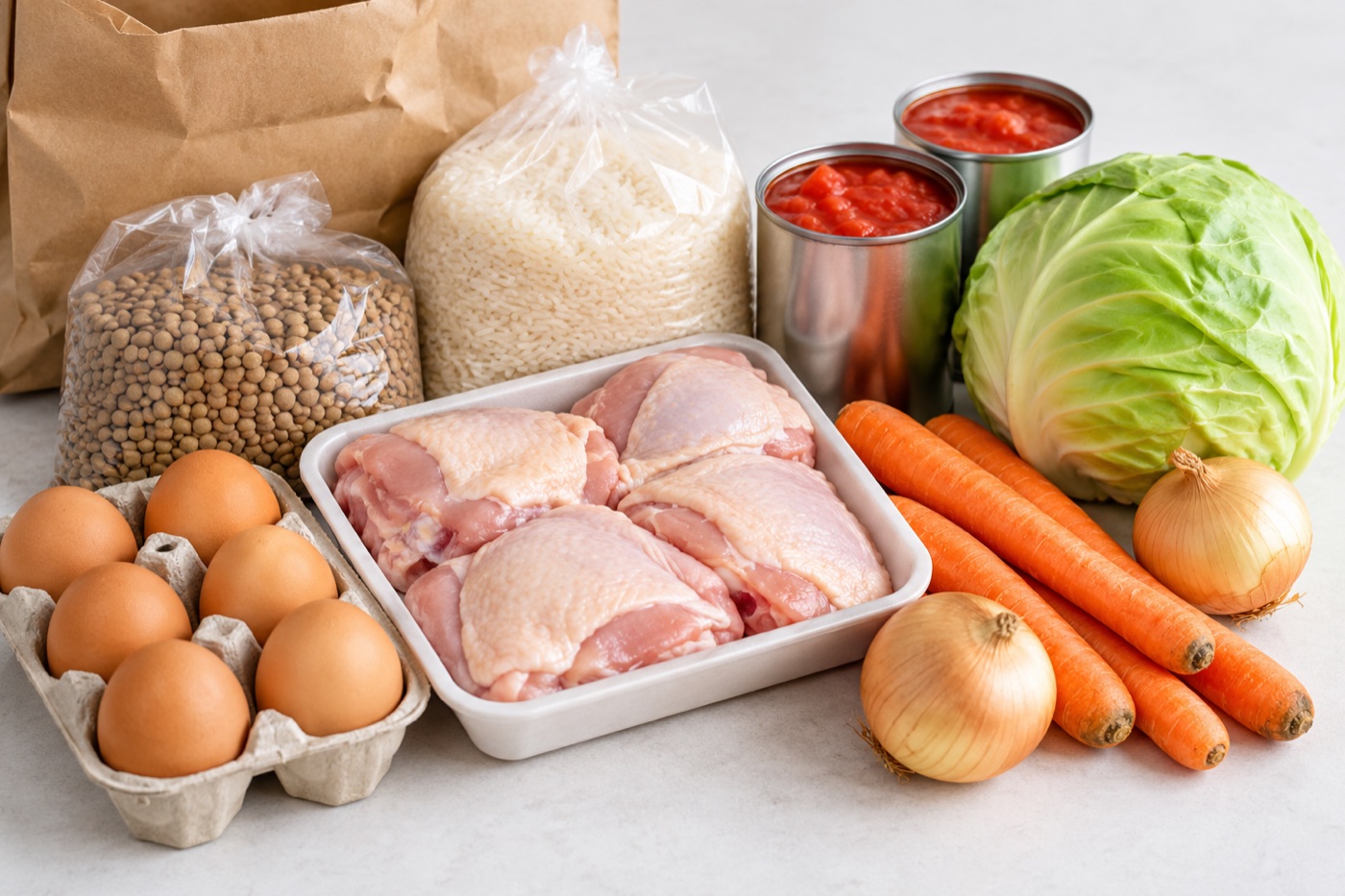
AI-generated editorial illustration.
Why most "budget meal prep" lists don't actually save money
Search "cheap meal prep" and you'll get fifteen recipes built around chicken breast, quinoa, and pre-cut vegetables. None of those are cheap. Chicken breast runs almost double the price per gram of protein compared to bone-in thighs. Quinoa costs three to four times what brown rice or oats cost per serving. Pre-cut vegetables carry a 30-50% markup for something you could do yourself in ten minutes with a knife.
A budget week isn't a version of a normal week with cheaper swaps sprinkled in. It's built from a different starting list entirely — one where four ingredient categories carry almost the whole cart, and everything else is seasoning.
The four things that actually make a week cheap
Eggs deliver roughly 6 grams of protein for under $0.30 each, which works out to around $0.03-0.05 per gram — better value than almost anything else in the store. Dried lentils land in the same range and cost even less by weight, since a $2 bag rehydrates into several pounds of finished food. Bone-in, skin-on chicken thighs run $1.99-2.49 a pound on sale, noticeably less than boneless breast, while delivering comparable protein per ounce once you account for the edible yield.
The fourth piece is a cheap carb base — rice, oats, or sweet potato — all of which cost pennies per serving compared to bread, tortillas, or packaged grain blends. Stack those four categories and you've covered 80% of a week's calories before you've spent $20.
| Protein source | Approx. cost/gram protein | Notes |
|---|---|---|
| Dried lentils | $0.02–0.04 | Cheapest overall; needs 20-30 min simmer |
| Eggs | $0.02–0.03 | Best value among whole animal proteins |
| Chicken thighs (bone-in) | $0.04–0.06 | ~70% edible yield after bone |
| Canned tuna | $0.04–0.05 | No cook time, good for lunches |
| Chicken breast | $0.07–0.09 | Convenient but costs more per gram |
A real $50 cart
Here's roughly what that looks like at a standard grocery store, not a specialty market: a 5-lb bag of chicken thighs (~$10), a dozen eggs twice over (~$7), a 2-lb bag of dried lentils (~$4), a large bag of brown rice or a canister of oats (~$5), frozen broccoli and a bag of frozen mixed vegetables (~$6), a few sweet potatoes (~$4), canned tomatoes and a small jar of salsa (~$5), and a handful of aromatics — onion, garlic, a lime or two (~$5). That's around $46, with $4 left for a spice you're missing.
That cart produces roughly 15 lunches and dinners plus 5-7 breakfasts if you turn the oats into overnight oats or use eggs for a couple of mornings. Per-plate cost lands between $3 and $3.50, and that's before factoring in that most of these ingredients have leftover volume for a second week.
The spice shelf is the real investment
This is the part budget guides skip. Rice, beans, and chicken thighs taste identical to each other by Wednesday if you're using the same salt and pepper on everything. A one-time $15-20 spend on cumin, smoked paprika, chili powder, a good curry powder, dried oregano, and a bottle of soy sauce or fish sauce turns four boring base ingredients into four or five distinct meals — chicken thighs braised in tomatoes and cumin taste nothing like the same thighs tossed in soy sauce and ginger. That spice shelf lasts 6-12 months, so amortized across a year it adds maybe $1.50 a week to the budget. It's the highest-leverage purchase on this entire list.
The 90-minute Sunday session
Plan 5 distinct dinners for the week, repurpose 2 of them as next-day lunches, and leave one night open for pantry staples or a fridge clean-out meal. This keeps you from eating the exact same bowl seven days running without adding a single extra ingredient to the cart.
Where people actually overspend
Three things blow a $50 budget almost every time: buying pre-marinated or pre-seasoned proteins instead of seasoning plain ones yourself, buying small quantities of fresh produce instead of the frozen version of the same vegetable, and buying specialty sauces instead of building flavor from a base spice shelf. None of these mistakes feel expensive individually — a $6 marinated chicken tray here, a $4 fresh herb pack there — but they're usually the difference between a $50 week and a $70 one for the same amount of food.
A tight grocery budget doesn't have to mean bland food or a spreadsheet. It means picking a handful of ingredients that are cheap for a real reason — high yield, long shelf life, minimal waste — and using seasoning, not variety of ingredients, to keep the week interesting.
Let the app handle the math
Kenji builds weekly meal plans around your budget and macro targets automatically, so you get the cheap-protein logic above without doing the spreadsheet yourself.