
Meal Prep
How to Meal Prep Salads That Actually Stay Crisp All Week
Open a meal-prepped salad on day four and you'll usually find one of two things: a soggy puddle at the bottom of the container, or greens that have gone limp and slightly slimy. Neither is really a salad problem. It's a moisture problem, and once you build around it, a prepped salad can taste just as crisp on Friday as it did on Monday.
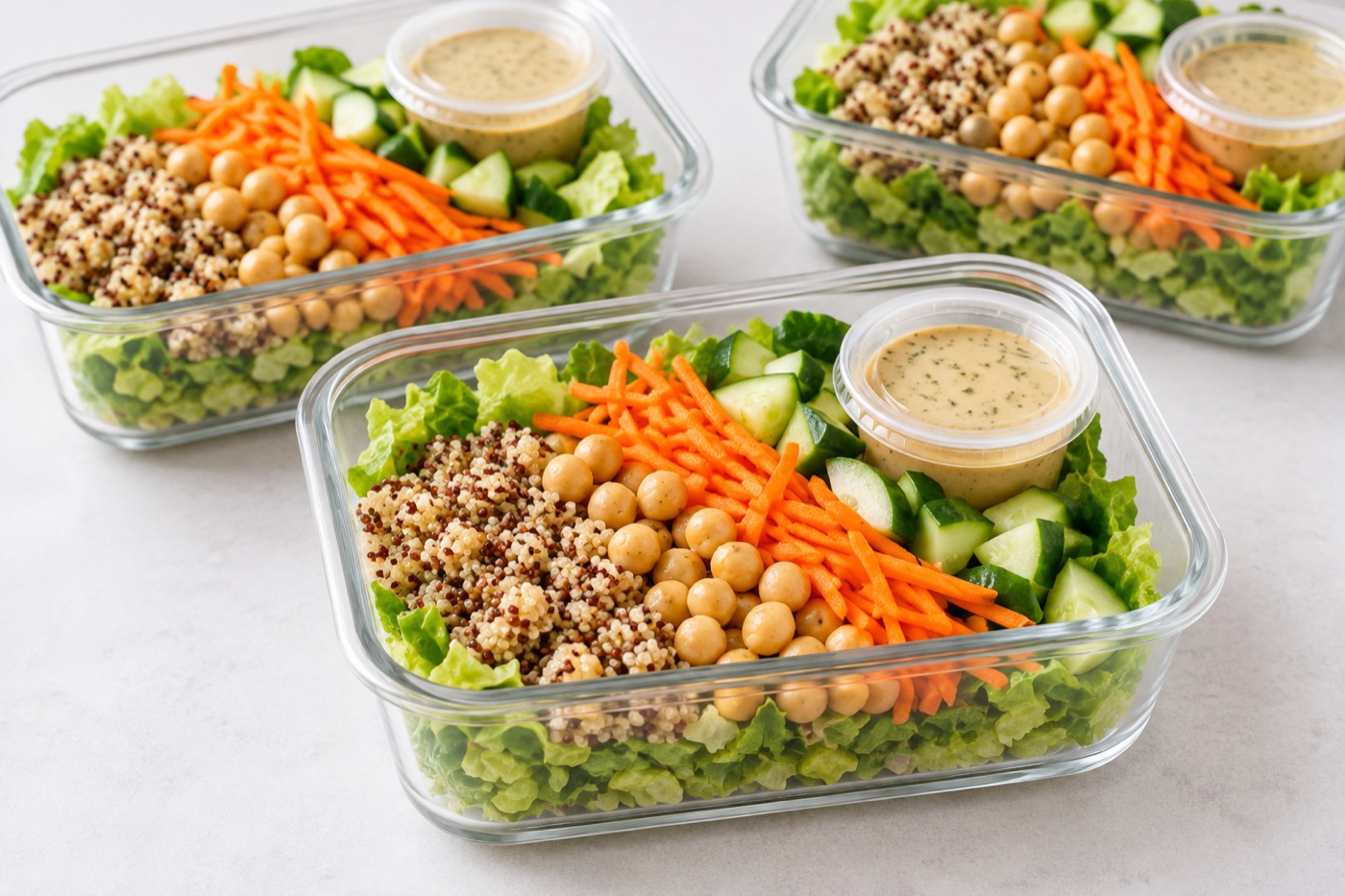
AI-generated editorial illustration.
It's not going bad. It's getting wet.
Most people assume a wilted salad means the vegetables have started to spoil. Usually they haven't. A cucumber is roughly 95% water, and the moment you slice it, that water starts migrating outward looking for somewhere to go. If the somewhere it goes is a bed of lettuce sitting three inches below it in a container, the lettuce loses. That's the whole mechanism — not bacteria, not time, just water moving downhill onto leaves that can't handle it.
This is why the same salad ingredients can last four days or fall apart in one, depending entirely on how they're stored. Chopped tomato holds its texture for about 3 to 4 days refrigerated on its own, but drop it straight onto spinach and you'll get soggy spinach within hours, not days. The vegetable didn't fail. The layout did.
The layering order that fixes almost everything
If you've seen mason jar salads on social media and assumed it was an aesthetic choice, it isn't. The order is doing real work, and it's the single biggest lever for making a salad last the week. Build it in a tall, wide-mouth jar in this order, bottom to top:
Built this way, a salad realistically holds for 4 to 5 days. Most people skip straight to buying a $15 divided bento box for this problem when a $2 wide-mouth mason jar does it better — glass seals tighter than most plastic lids, and the vertical stacking works with gravity instead of fighting it in side-by-side compartments.
Not all greens are built for a five-day fridge life
Romaine, kale, cabbage, and iceberg are sturdy enough to survive 3 to 7 days refrigerated without turning to slime. Baby spinach, spring mix, and butter lettuce are a different story — they're thinner-walled and wilt fast, sometimes within a day or two even stored well. If you're set on using them, keep them in their own sealed bag separate from everything else and combine on the day you eat, rather than prepping them into the jar with the rest.
One thing worth doing differently than people expect: massaged kale actually improves over a day or two. A small amount of oil worked into the leaves by hand breaks down the tough cell structure that makes raw kale taste bitter and chewy, and the texture gets better, not worse, as it sits.
The vegetables you're prepping wrong
Firm vegetables are safe to prep in bulk: whole cherry tomatoes, bell pepper strips, carrots, radishes. They hold their structure because they don't have much free water to release. Watery vegetables are the opposite story — cut cucumber and zucchini lose their crunch within about 2 days of being sliced, because once the skin is broken, that 95% water content has nowhere to go but out.
If you want cucumber in a five-day prep, cut it into thick rounds rather than thin slices — less exposed surface area means slower water loss — or just prep it fresh the morning you'll eat it rather than batching it with everything else. It's a five-second job, not worth ruining three other days of salad over.
Dry your greens properly, or none of this matters
A wet salad spinner sitting in your cabinet is one of the more underrated pieces of meal prep equipment. Residual water clinging to washed greens after rinsing is one of the most common causes of early wilting, and it happens before the salad even goes in the fridge. Spin greens until they're actually dry, not just "not dripping." If you're storing a salad in a bowl instead of a jar, tuck a paper towel under the lid to absorb ambient moisture, and swap it out every day or two once it's damp.
Dressing on the bottom, sturdy vegetables and protein in the middle, greens loosely on top, dry everything thoroughly before it goes in the container. Built this way, salads hold for 4-5 days. Skip the layering and you're looking at a soggy mess by day two regardless of how fresh the ingredients were.
Save the crunch for last
Nuts, seeds, and croutons should never go in the jar with everything else, even at the top. They're not fighting moisture from the dressing, but they are absorbing ambient humidity from the greens sitting next to them all week, and a soft almond is a genuinely sad thing to bite into. Keep them in a small separate container — an old spice jar works fine — and add them in the seconds before you eat, not the night before.
Salads are easier when the plan's already made
Kenji builds your weekly meal plan around what actually holds up in the fridge, with a grocery list and macros already sorted — so prep day is assembly, not guesswork.