
Nutrition
The Protein-Per-Calorie Metric That Changes How You Grocery Shop
You could be eating 40g of protein at lunch and still making it harder to hit your daily goal — because you burned 700 calories doing it. The number that actually determines whether your diet works isn't total protein. It's how much protein you get per calorie spent.
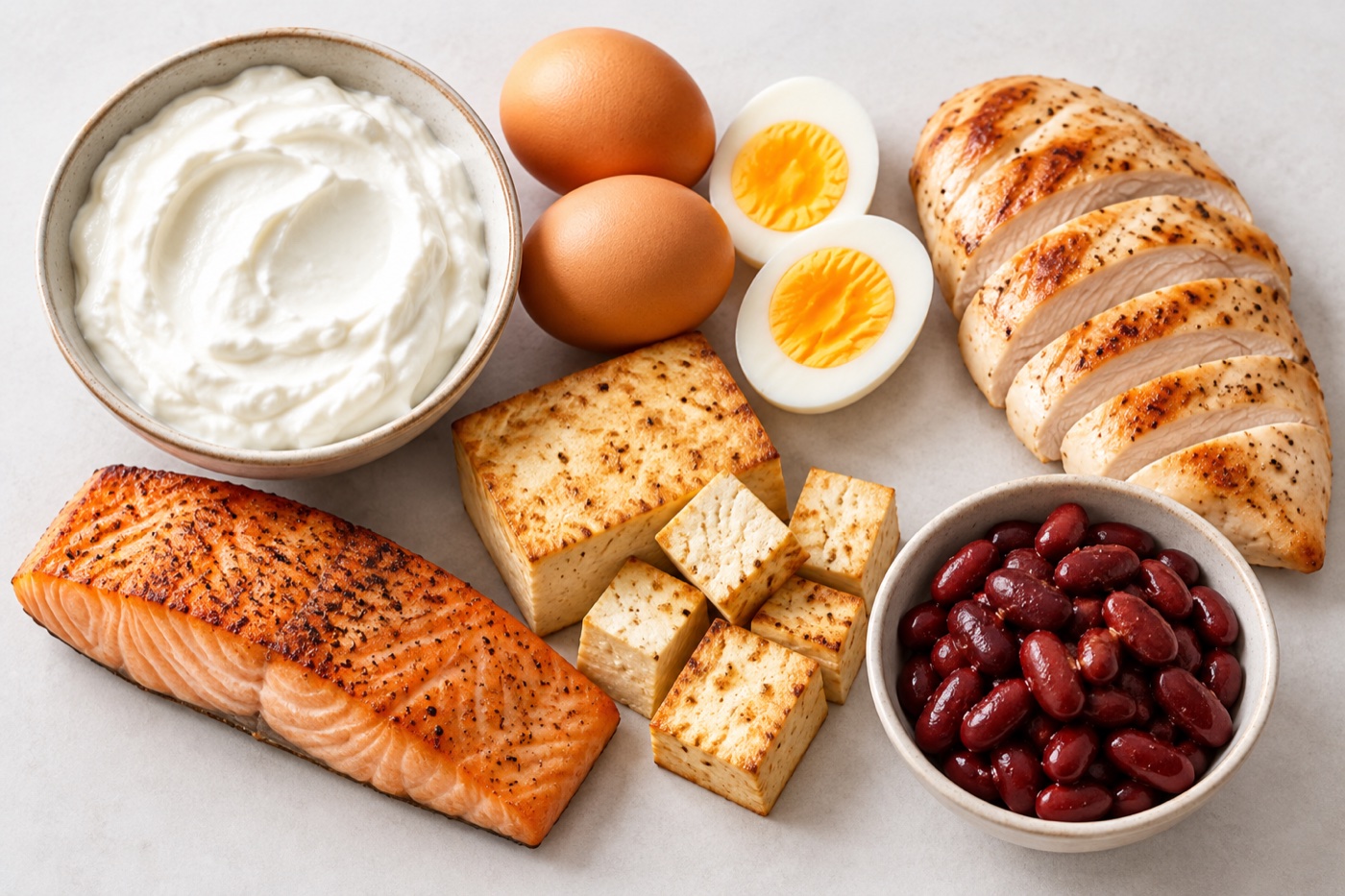
AI-generated editorial illustration.
Why total protein is the wrong thing to optimize
Most nutrition advice tells you to hit a protein target — something like 0.7–1g per pound of bodyweight. That's reasonable advice. But it says nothing about how efficiently you get there. Two 40g-protein meals are not equivalent if one costs you 350 calories and the other costs 700.
If you're trying to lose fat while keeping muscle, you're working within a calorie budget. Every calorie you spend on protein is a calorie you're not spending on everything else — carbohydrates for energy, fats for hormones, vegetables for micronutrients. So the goal isn't just to eat protein. It's to get as much protein as possible per calorie spent, which frees up your remaining calories for the rest of your diet.
This ratio has a name: protein density, or protein per calorie. And most people have never thought about it.
What protein density actually means
Protein density is expressed as grams of protein per 100 calories. It's a simple calculation: take the grams of protein in a food, divide by total calories, multiply by 100. A food with 25g of protein and 100 calories has a protein density of 25. A food with 25g of protein and 500 calories has a density of 5. Same total protein — radically different calorie cost.
A practical target: aim for foods that deliver at least 10g of protein per 100 calories as your main protein sources. Below that threshold, the food is doing double duty — protein source and calorie source — which makes hitting both your protein goal and your calorie ceiling much harder.
Here's where this gets counterintuitive. Some foods people think of as "high protein" are actually poor protein-per-calorie sources. Peanut butter has about 3.5g of protein per 100 calories. Whole milk: around 5g. Cheddar cheese: about 6g. These foods aren't bad — they just shouldn't be your primary protein strategy if you're watching your intake.
The foods that actually win
Here are the best protein-per-calorie sources, based on USDA FoodData Central values. These numbers assume cooked weights for meats and seafood.
| Food | Protein per 100 cal | Calories per 100g | Notes |
|---|---|---|---|
| Shrimp (cooked) | 23.5g | 71 kcal | Best protein density of any whole food |
| Egg whites | ~20g | 52 kcal | Almost pure protein, zero fat |
| Chicken breast (skinless) | 18.8g | 165 kcal | The reliable standard |
| Canned tuna in water | 13.5g | 109 kcal | No cooking required |
| Cod / white fish | ~13g | 82 kcal | Cheap, neutral flavor, easy to cook in bulk |
| Cottage cheese (low-fat) | 11.2g | 90 kcal | Slow-digesting casein; great before bed |
| Greek yogurt (non-fat, plain) | 10.2g | 59 kcal | Also works as a sauce or dip base |
| Turkey breast | ~10g | 135 kcal | Underrated for meal prep; batch-roast well |
Shrimp's number is striking. At 23.5g of protein per 100 calories, you'd have to eat nearly 450 calories of chicken breast to get the same protein that 200 calories of shrimp delivers. That's a 250-calorie difference — roughly 40 minutes on a treadmill, or a couple of extra servings of rice.
The caveat: shrimp is higher in dietary cholesterol than chicken, though current research doesn't show this meaningfully raises LDL in most people. If you have a specific lipid concern, it's worth discussing with your doctor. For most people, it's a non-issue.
The foods that fool people
Salmon is the most common one. It's genuinely nutritious — excellent omega-3 content, good micronutrient profile — but it's not a lean protein source. Salmon delivers about 6.5g of protein per 100 calories, which is actually closer to whole eggs (5.3g) than to chicken breast. That's not a reason to avoid it. It's a reason not to treat it as your primary protein strategy when you're cutting calories.
The same logic applies to fattier cuts of beef. A ribeye has impressive total protein, but because of its fat content, you're often getting 5–7g of protein per 100 calories. A sirloin or round steak gets you closer to 8–9g — not as efficient as chicken or shrimp, but significantly better than fattier cuts.
Edamame deserves a mention as an underrated plant-based option. It delivers about 5.7g of protein per 100 calories, which isn't elite — but it's also one of the few plant proteins that's complete (contains all nine essential amino acids) and comes packaged with fiber and magnesium. For a side dish, it punches above its weight.
How to use this in practice
You don't need to calculate protein density for every food you eat. You just need to build your meals around one or two high-density anchor proteins, then fill in the rest of your calories however you like.
If a food delivers at least 10g of protein per 100 calories, it can anchor a meal. Below that, treat it as a supplement — useful, but not your main protein source. Your go-tos: shrimp, chicken breast, egg whites, tuna, cod, cottage cheese, non-fat Greek yogurt, turkey breast.
The bigger picture
Protein density isn't a rigid rule — it's a lens. Some of the healthiest foods in the world (salmon, whole eggs, legumes) don't score high on this metric, and that doesn't make them bad choices. What it means is that your calorie budget is a real constraint, and you want your primary protein sources to be doing real work within that constraint.
The people who struggle to hit their protein goals aren't usually eating zero protein. They're eating protein in calorie-expensive packages — yogurt with added sugar, protein bars that are mostly fat and carbs, nut-based meals that crowd out room for leaner sources. Swapping even one meal per day to a higher-density protein source — say, canned tuna instead of a chicken salad with heavy dressing — can add 15–20g to your daily total without adding a single calorie.
That's the shift. Not eating more. Just spending your calorie budget on protein that earns its place.
Build meals around your protein goals automatically
Kenji plans your week around your macros — tracking protein density so you hit your targets without the math.