
Nutrition Science
How Much Protein Can Your Body Actually Use in One Meal?
You've probably heard it in a gym locker room or a fitness forum: your body can only absorb about 30 grams of protein per meal, so anything more just gets flushed. That number comes from a real study, misapplied to a claim it never made — and believing it can quietly cap your results.
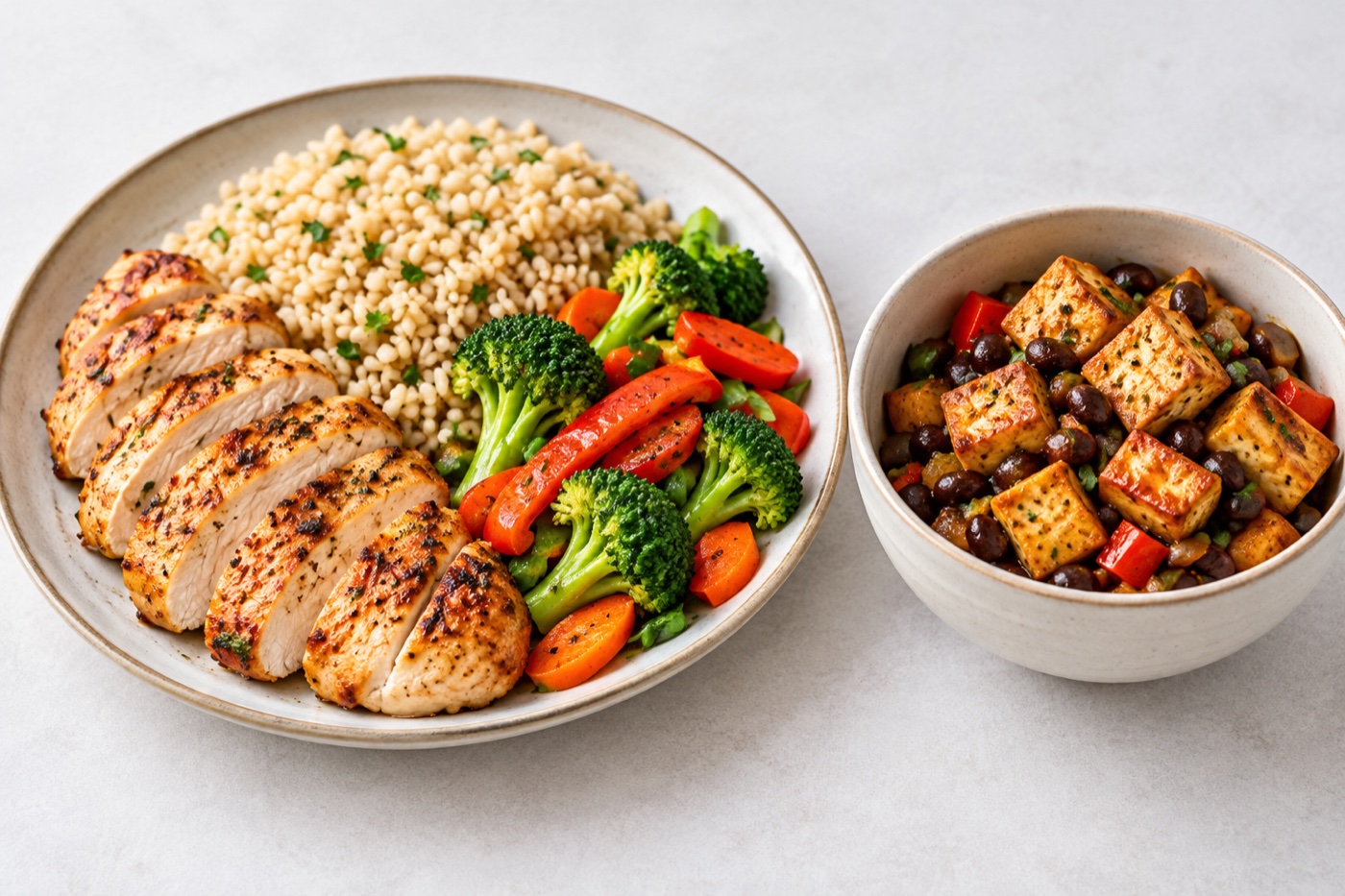
AI-generated editorial illustration.
Where the 30-gram number actually came from
The number gets repeated so often it sounds like settled physiology: your body can only absorb around 30 grams of protein per meal, so a 60-gram chicken breast is half wasted. It's not true, and the studies people cite to back it up don't say what the gym-bro version claims.
The real research measured muscle protein synthesis (MPS) — the rate at which your body builds new muscle tissue — after people ate different amounts of whey or egg protein, then tracked the response for about three hours. Those trials found that MPS rose sharply up to roughly 20 to 25 grams of high-quality protein, then leveled off. Fine, as far as it goes. The problem is that a 3-hour window got turned into a permanent ceiling on absorption, which is a different claim entirely, and one the data never supported.
Digestion isn't the bottleneck — signaling is
Here's the part that gets lost: your gut absorbs almost all the protein you eat, regardless of the amount. A 100-gram steak doesn't leave 70 grams undigested in your intestines. Isotope-tracer studies that followed labeled protein through the body for 12 hours after a 100-gram dose found that less than 15% got oxidized (burned for energy instead of used for tissue). The rest didn't vanish — it went into a much longer, slower process of protein turnover, gut repair, immune function, and yes, continued muscle building, just spread out over more hours than a 3-hour lab window can capture.
One trial giving people 100 grams of milk protein after a resistance workout found it kept anabolic signaling elevated for longer than the standard 25-gram dose did. Not identical to a bigger single spike — just a longer one. That's a very different picture from "wasted."
MPS may peak around 20–35 grams of protein in a single meal for most adults. That's a ceiling on how fast your body builds muscle in the next few hours — not a ceiling on how much protein gets used. Eating 50 grams in one sitting doesn't throw away 20 of them.
The leucine threshold is the real switch, not a gram count
The mechanism behind the per-meal plateau isn't protein grams at all — it's one amino acid, leucine, which acts as the trigger that flips on muscle protein synthesis. Most adults need roughly 2 to 3 grams of leucine in a meal to fully trip that switch. Where that lands in grams of protein depends entirely on the source: whey and eggs are leucine-dense, so 25 to 30 grams gets you there. Plant proteins like beans or lentils are more diluted, so you might need 40 grams or more of the same food to hit the same leucine number.
This is why "just eat 30 grams" is bad advice as a universal rule — it was calibrated on whey protein powder, not on your lentil bowl or your turkey chili. If you're eating a leucine-poor source, you need more total protein at that meal to get the same anabolic trigger.
| Protein source | Approx. leucine content | Grams needed to hit 2.5g leucine |
|---|---|---|
| Whey protein powder | ~10-11% of protein | ~25g |
| Eggs | ~8-9% of protein | ~30g (about 4-5 eggs) |
| Chicken breast / lean beef | ~7-8% of protein | ~32-35g |
| Lentils / black beans | ~6-7% of protein | ~38-42g |
| Tofu / soy | ~7% of protein | ~36-40g |
This is also the practical reason mixed meals work in your favor — combine a plant protein with even a small amount of a leucine-dense food (a spoon of Greek yogurt, an egg on top of a grain bowl) and you close the gap without needing a bigger total portion.
Age changes the math, and most people don't adjust for it
There's a well-documented phenomenon called anabolic resistance: as you get older, your muscle tissue needs a bigger protein dose to trigger the same MPS response. Research on this puts the threshold for adults over roughly 60 at 30 to 40 grams per meal, compared to 20 to 30 grams for someone in their twenties or thirties. If you're prepping meals for parents, or you're past 55 yourself, sizing every meal to a 25-year-old's "optimal" dose is leaving muscle-building signal on the table. This matters more than most nutrition content admits, because sarcopenia — age-related muscle loss — is driven partly by exactly this gap between what older adults eat and what their muscles actually need to respond.
Total daily intake still does most of the heavy lifting
None of this means per-meal timing is where you should spend your mental energy. The stronger, more consistent finding across the research is that total daily protein — generally 1.6 to 2.2 grams per kilogram of bodyweight for someone training regularly — predicts muscle and strength outcomes far better than how it's distributed across meals. A rough per-meal target is about 0.4 grams per kilogram of bodyweight, which works out to 27–33 grams for a 150–180 lb person. That's a reasonable floor to aim for at each sitting, not a ceiling to avoid crossing.
In practice: if you're hitting your daily number, whether a single meal has 28 grams or 55 grams is a secondary detail. What actually costs people gains is under-eating protein across the whole day because they got anxious about "wasting" anything above 30 grams per sitting — and then skipped a second helping they didn't need to skip.
This shows up constantly with people trying to hit high protein targets (150-200+ grams a day) on a normal eating schedule. Three meals a day means you need 50-65 grams per sitting just to stay on pace — well above the mythical 30-gram cap. If you'd internalized that number as a real limit, you'd have talked yourself out of a target that's completely achievable and, for most active adults, exactly where you want to be.
What to actually do with this
Stop rationing protein like it expires after 30 grams. If your schedule works better with three bigger meals than six small ones, that's fine — just make sure each meal clears roughly 25–40 grams (more if it's plant-based, more if you're over 60) and that your daily total lands in range. Batch-cooked chicken thighs, a double portion of ground turkey, a bigger scoop of lentils with your rice — none of it is wasted. Spreading protein evenly across the day is a convenience choice, not a biological requirement.
If you're tracking macros and this changes how you plan meals — fewer, bigger protein hits instead of forcing an even split six times a day — that's a legitimate strategy, not a workaround.
Meals sized around what your body actually uses
Kenji builds your plan around your real daily protein target, not an arbitrary per-meal cutoff, so bigger meals and fewer of them work just as well as six small ones.