
Food Safety
The Rice Meal Prep Mistake That Has Nothing to Do With Reheating
Rice is the backbone of most meal prep — cheap, filling, and it freezes well. It's also the ingredient most likely to make you sick, and almost nobody understands why. It has nothing to do with reheating it wrong. It's about what happens in the hour after you turn off the stove.
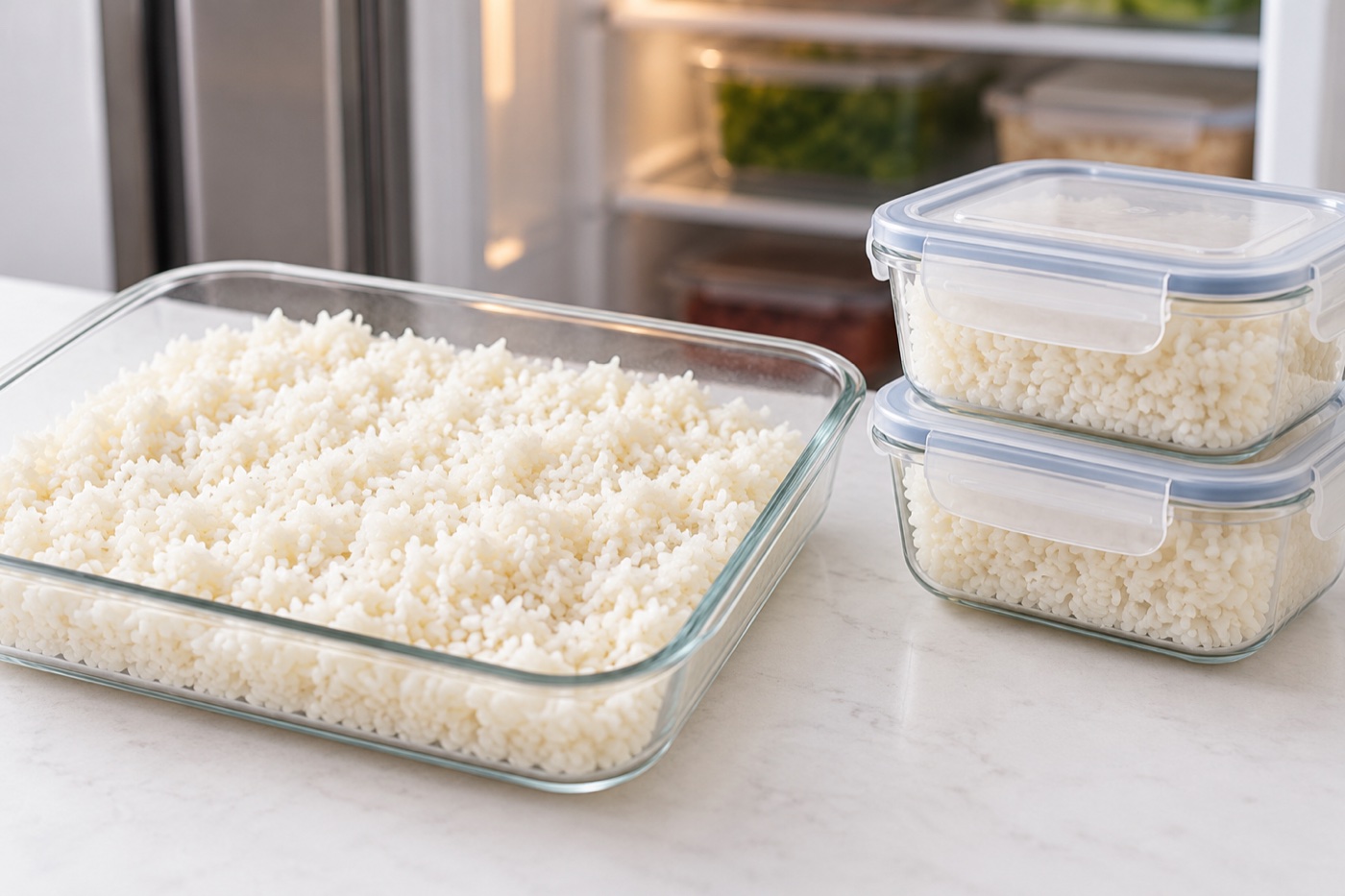
AI-generated editorial illustration.
The bacteria that cooking doesn't kill
Raw rice almost always carries spores of a bacterium called Bacillus cereus. Cooking kills the active bacteria, but the spores are built to survive heat — they ride out the boil just fine. That's normal and not dangerous on its own. The problem starts if the cooked rice then sits around at room temperature. Those spores wake up, multiply, and start producing a toxin called cereulide.
Here's the part that trips people up: cereulide is heat-stable. You can reheat rice to 165°F, microwave it until it's steaming, even boil it again, and the toxin doesn't break down. Reheating kills bacteria; it does not undo a toxin that's already there. So the guides that tell you to just "reheat thoroughly" are answering the wrong question. By the time you're reheating, the damage — if there's going to be any — was already done hours earlier.
The one-hour window that actually matters
The CDC's guidance is specific: cooked rice needs to go into the fridge within 2 hours of cooking, or within 1 hour if your kitchen is above 90°F. That second number matters more than people think — a stovetop that's been running for an hour, a summer kitchen with no AC, a batch left out while you finish cooking three other dishes. All of it pushes you toward that 1-hour cutoff.
Symptoms show up fast when this goes wrong. The vomiting form of Bacillus cereus poisoning hits 1 to 6 hours after eating. The diarrheal form takes 6 to 15 hours. Neither is usually dangerous for a healthy adult, but both are miserable, and both are entirely preventable with something as boring as a kitchen timer.
How long meal-prepped rice actually lasts
Assuming you cool it properly, rice keeps for 3 to 4 days in the fridge. Push past that and you're relying on smell and texture to tell you it's gone bad, which isn't reliable — Bacillus cereus doesn't always make food smell or taste off. If it's been 4 days, it goes, even if it looks fine. Frozen, rice is good for 3 to 6 months, and it reheats better than most people expect if you add a splash of water before microwaving.
The rule that matters more than any expiration date
Cook it, cool it fast, and get it in the fridge within an hour if your kitchen's warm — 2 hours max otherwise. Use it within 3 to 4 days. Everything else about rice safety is a footnote to that one rule.
The batch-cook mistake almost everyone makes
If you're meal prepping for the week, you're probably cooking a big pot of rice — 4, 6, sometimes 8 cups at once. That's efficient, but it works against you here. A deep pot of hot rice cools from the outside in. The center of a large batch can stay above 100°F for over an hour even sitting in the fridge, because the fridge can only pull heat off the surface. You think you refrigerated it in time; the middle of the pot didn't get the memo.
The fix is simple and a little annoying: spread the rice out. A sheet pan or a few shallow containers cool rice in a fraction of the time a deep pot does, because you're maximizing surface area instead of insulating the middle with more hot rice. Five minutes of extra dishes is a small price for cutting your cooling time by more than half.
The part nobody talks about: cold rice is nutritionally different rice
Here's the underrated upside to all this cooling and refrigerating you're already doing for safety reasons — it changes the rice itself. When cooked rice cools, some of its starch undergoes a process called retrogradation, converting a portion of it into resistant starch, which your body digests much more slowly, closer to how it processes fiber.
A clinical study on this found that rice cooled for 24 hours at 4°C and then reheated produced a significantly lower blood sugar response than freshly cooked rice — 125 versus 152 mmol·min/L in the glycemic response measurement, a meaningful difference. Other research has shown the effect can cut glycemic impact by 30 to 50%. One small study even found that cooking rice with a teaspoon of coconut oil before cooling multiplied the resistant starch content roughly tenfold. That result hasn't been widely replicated, so treat it as interesting rather than settled — but the core finding, that day-old refrigerated rice hits your blood sugar less hard than fresh rice, is well supported. If you're tracking macros or trying to manage blood sugar, the rice you meal prepped on Sunday is arguably a better choice by Wednesday than rice you just cooked.
How to actually meal prep rice
Let Kenji handle the timing for you
Kenji builds your meal prep plan around what actually keeps well — including when to batch-cook rice and how to portion it so nothing sits in the fridge longer than it should.