
Meal Prep Science
Why Your Meal Prep Tastes Worse by Day 3 (And How to Fix It)
You open the container on day three and something's off — the chicken tastes flatter, almost metallic, and the rice has gone from fluffy to chalky. You didn't mess up on Sunday. This is straightforward food chemistry, and once you know what's happening, it's fixable.
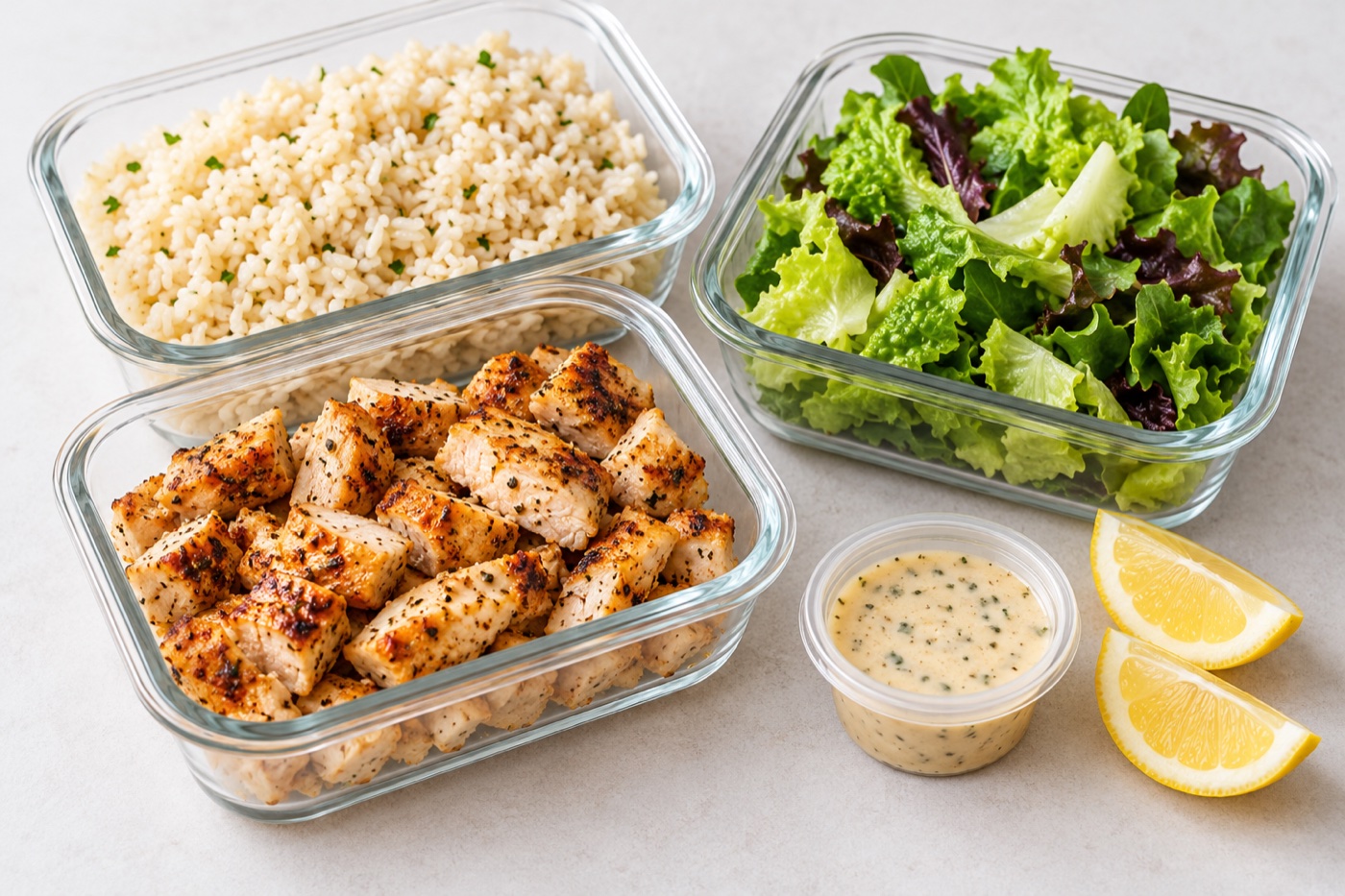
AI-generated editorial illustration.
The sulfur smell isn't spoilage
Open a container of day-three eggs or chicken and get a whiff of something sulfurous, and the instinct is to toss it. Don't, at least not on smell alone. That smell is hydrogen sulfide, a gas released when the amino acids cysteine and methionine break down under heat and time. Eggs are the classic offender — the greenish ring around a hard-boiled yolk is the same reaction — but it shows up in chicken, cruciferous vegetables like broccoli and cauliflower, and anything with a lot of sulfur-containing protein. It's ugly, it's not appetizing, and it's almost always still safe to eat. Spoilage smells sour or rotten; this smells like a struck match. Different chemistry, different problem.
The real culprit: warmed-over flavor
The bigger issue with reheated meal prep has a name food scientists actually use: warmed-over flavor, or WOF. It's caused by lipid oxidation — the unsaturated fat in meat reacting with oxygen, catalyzed by trace iron in the muscle tissue. Cooking ruptures cell membranes and releases that iron, and every hour in the fridge afterward gives the fat more time to oxidize into aldehydes and ketones that taste stale, cardboardy, faintly metallic. This is why a chicken thigh you cooked Sunday tastes noticeably flatter by Wednesday even though nothing "went bad."
Fattier, darker cuts oxidize faster than lean ones — thighs before breast, salmon before cod, ground beef before sirloin — because there's more unsaturated fat and more iron to drive the reaction. It also compounds with every reheat cycle, which is the actual argument for portioning meals into single servings instead of reheating the same tray twice. Antioxidants slow it down measurably: rosemary, a squeeze of lemon or vinegar, and vitamin C-rich vegetables added at the reheat stage all interrupt the oxidation chain. This is part of why a squeeze of lime on reheated tacos or a splash of vinegar on reheated greens tastes like it's fixing something — it is.
Why rice and pasta go from fluffy to chalky
Separately from the meat problem, your starches are degrading through a process called retrogradation. When rice or pasta cooks, its starch granules absorb water and swell — that's what makes them soft. As they cool, especially in a refrigerator running at 34–40°F, the starch molecules realign into a tighter crystalline structure and push the water back out. That's the graininess in day-two pasta and the hard, dry grains in reheated rice. It happens fastest in the fridge, which is ironically the coldest common storage option short of the freezer, and it's largely why rice tastes noticeably better reheated with a splash of water than reheated dry — the added moisture partially re-dissolves those crystals and softens the texture back down, at least temporarily.
Sulfur smell = safe, just unpleasant. Flat, cardboardy meat = oxidation, not spoilage, and it gets worse with every reheat. Chalky rice or grainy pasta = starch retrogradation, fixable with added moisture. None of these three mean the food is unsafe — they mean time and temperature have been working against its texture and fat, not its safety.
Fix it before you cook, not just at the microwave
Pick the right reheating method for what's in the container
The microwave is fastest and it's fine for a quick lunch, but it heats unevenly and does the most damage to texture, especially on breaded or roasted food. If you have the extra six minutes, the oven or an air fryer recovers far more of the original texture.
| Method | Best for | Time & temp |
|---|---|---|
| Oven | Roasted meat, casseroles, sheet-pan meals | 300–325°F, 12–18 min, foil-covered for the first half |
| Air fryer | Breaded proteins, roasted vegetables, anything you want crisp | 300–350°F, 5–8 min |
| Stovetop | Stir-fries, saucy dishes, grain bowls | Medium-low, 5–10 min, with a splash of water or broth |
| Microwave | Quick single servings when time is tight | 60–90 sec at 50% power, covered loosely |
The timing matters more than the technique
Here's the part most meal prep guides skip: freezing doesn't just extend how long food lasts, it pauses the oxidation clock almost entirely. A portion frozen on day one and reheated three weeks later will taste closer to fresh than a portion that sat in the fridge until day five. If you're batch-cooking for the week, the smarter move is often to portion two or three days' worth into the fridge and freeze the rest immediately, rather than leaving all seven servings in the fridge and watching the back half degrade. Most warmed-over flavor and starch retrogradation is already noticeable by day three or four in the fridge — freezing sidesteps that window instead of racing it.
Let Kenji handle the timing, not just the recipes
Kenji builds your week around meals that actually hold up — sequencing what to eat fresh first, what to freeze, and how to reheat each one so day four tastes like day one.