
Cooking Skills
Plan Dinner Around Your Burners to Prevent Equipment Bottlenecks
2026-10-23 · 6 min read · Kenji Meals
Three simple recipes can make a difficult dinner when each assumes exclusive use of your kitchen. The fix is to plan equipment alongside ingredients. Give every heated step a place, distinguish work that needs your hands from cooking that needs occasional checks, and identify the chain of steps that controls serving. Greek Baked Cod Plaki, Roasted Veg & Herb Couscous and Classic Horiatiki Greek Salad make a useful example: one oven, two burners and a deliberate handover between dishes.
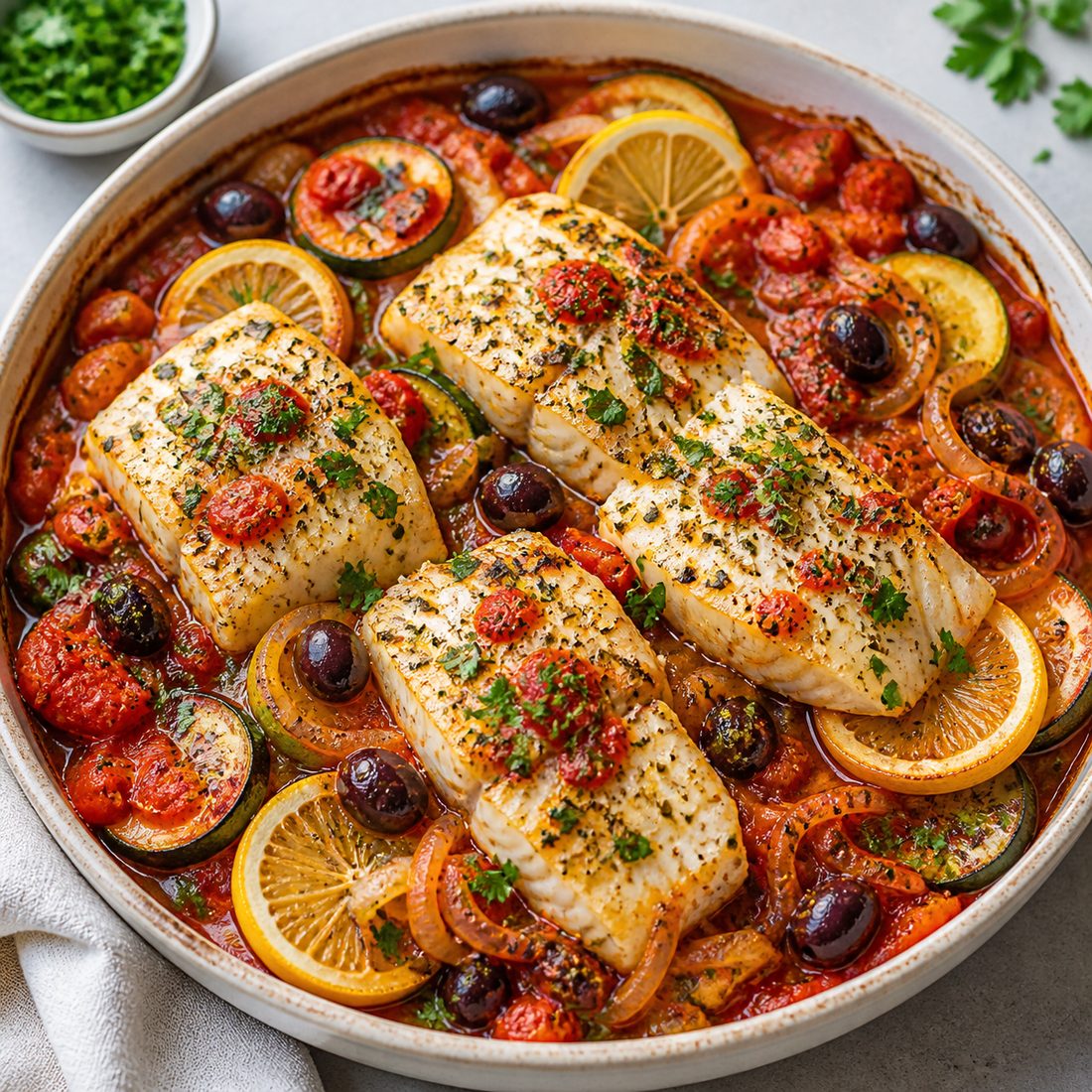
Illustration from our Greek Baked Cod Plaki recipe. Recipes and planning examples are not independently kitchen-tested.
Read for equipment before you start cooking
Read all three recipes before switching on the heat. Beside each step, write its vessel, heat source and release cue: the event that makes that equipment available again. A saucepan does not become available simply because you stop stirring it. If sauce remains inside, the pan is still occupied.
For this dinner, the couscous vegetables and cod both need oven space. The cod also needs a tomato base prepared on the hob, while couscous needs boiling water followed by hydration off the heat. The salad needs counter space and a bowl. The supplied recipe summaries do not specify oven temperatures, liquid ratios or cooking durations, so take those details from the full recipes and couscous packaging. This is a coordination plan, not a replacement cooking method.
Mark active work and unattended cooking separately
Label chopping, stirring onions, transferring hot sauce, fluffing couscous and assembling salad as active work. Label vegetable roasting, a settled sauce simmer, covered couscous hydration and fish baking as unattended intervals, with checks. Unattended means your hands can do another task nearby; it does not mean the food needs no supervision.
Some steps change category midway. Starting the tomato base takes attention, but its later simmer may leave room to measure couscous. Bringing water to the boil allows other work until the transfer, which needs your full attention. Avoid scheduling two demanding handovers together. If the vegetables need checking just as water boils, finish the oven check before pouring.
Make an equipment map with release cues
Oven: reserve the first slot for the couscous vegetables on a roasting tray, then the next for cod in its tomato sauce in a baking dish. Release cue: the vegetables have reached the recipe’s roasting endpoint and their tray is removed. Check the fish recipe’s oven setting before the handover; the oven may need time to adjust.
Burner one: reserve it for the cod’s onion, garlic, chopped tomato and herb base in a saucepan or suitable pan. Release cue: the finished base is transferred to the fish’s baking dish and the burner is switched off. Burner two: reserve it for a separate saucepan of couscous water. Release cue: boiling water has been transferred to the couscous bowl and the burner is off.
Counter: reserve a heatproof bowl and cover for couscous, a separate salad bowl, and a clear heatproof landing place for the roasting tray. Use separate vessels for the vegetables and fish so that freeing the oven does not create a washing-up delay.
Identify the chain that controls dinner
In the planned sequence, vegetable roasting releases the oven, then the cod bakes, then dinner can be served. That chain controls finishing only if the tomato base, couscous and salad are ready when needed. The fish cannot start until both its sauce and its oven slot are ready.
This gives you a practical priority: protect the next handover. While vegetables roast, advance the tomato base before spending time on salad presentation. If the base is still unfinished when the tray comes out, sauce preparation becomes the delay. If you leave couscous hydration until the fish is done, couscous can become the final obstacle. The controlling step can change as you cook.
Start the vegetables, then use both burners
Prepare the couscous vegetables: courgette, red pepper, red onion and cherry tomatoes, with the recipe’s olive oil and oregano. Start them roasting according to the full recipe. Before moving on, put the couscous bowl, measured couscous and its cover where you can reach them.
While the vegetables roast, prepare the cod’s tomato base on burner one using its onion, garlic, chopped tomatoes, olive oil and herbs as directed. Bring the measured couscous water to the boil on burner two once the sauce is at a manageable stage. Hydrate the couscous off the heat using the recipe or package instructions, cover it, and switch off burner two. The bowl now occupies counter space without tying up a burner.
Keep the cod refrigerated until needed. Prepare salad vegetables using clean equipment before handling the fish, or clean the board, knife and work surface between those tasks.
Hand the oven to the fish and finish the sides
When the roasting vegetables reach their recipe endpoint, remove the tray to its reserved landing place. Confirm that the tomato base is ready and the oven is at the fish recipe’s required setting. Assemble the cod and sauce as directed, then put the baking dish into the available oven space.
During the fish’s bake, check the couscous hydration, fluff it when ready, and combine it with the roasted vegetables, mint and lemon according to its recipe. Assemble the Horiatiki with tomato wedges, cucumber chunks, sliced red onion, Kalamata olives, feta, oregano, olive oil and red wine vinegar. This salad contains no lettuce.
Treat salad assembly as interruptible work. Pause to check the fish whenever its recipe requires it. Serve when the cod has reached the recipe’s cooked endpoint and the sides are ready, rather than assigning this untested combination a total cooking time.
Resolve shortages before they become delays
If you have only one saucepan, record that constraint explicitly. Boil the couscous water first, transfer it to the heatproof bowl for hydration, then reuse the emptied saucepan for the tomato base. Start vegetable roasting around that sequence. The dishes can still overlap, but the sauce loses its immediate start.
Do not assume two oven shelves solve every conflict. Different temperature requirements, crowded trays and awkward access can make sequential cooking easier to manage. Larger quantities may require extra vegetable batches, delaying the fish’s oven slot. If the fish bake leaves insufficient time for salad preparation, chop the salad vegetables earlier and refrigerate them. Move flexible work earlier rather than rushing the final cooked dish.
Include cleanup and storage in the reservation
Before cooking, set out serving dishes and make space for leftovers so the finished meal does not compete with dirty pans. USDA’s Leftovers and Food Safety guidance says to refrigerate perishable food within two hours, or within one hour above 32°C, and keep the fridge at 4°C or below. Most cooked leftovers should be used within three to four days and reheated to 74°C.
For your next dinner, write three things beside every heated step: where it happens, how much attention it needs, and what releases the equipment. Then trace the steps that must finish before the last dish can cook. That small map tells you what to start first, what can overlap and which task deserves attention when the kitchen gets busy.
Recipes to use with this guide
- Greek Baked Cod Plaki — Cod baked in a garlicky tomato and herb sauce — light, lean and easy.
- Roasted Veg & Herb Couscous — Fluffy couscous tossed with roasted Mediterranean veg, herbs and lemon.
- Classic Horiatiki Greek Salad — The real village salad: tomato, cucumber, olives and a slab of feta, no lettuce.
Sources and further reading
The meal combinations and planning examples are suggestions; follow recipe instructions and product labels for your ingredients.