
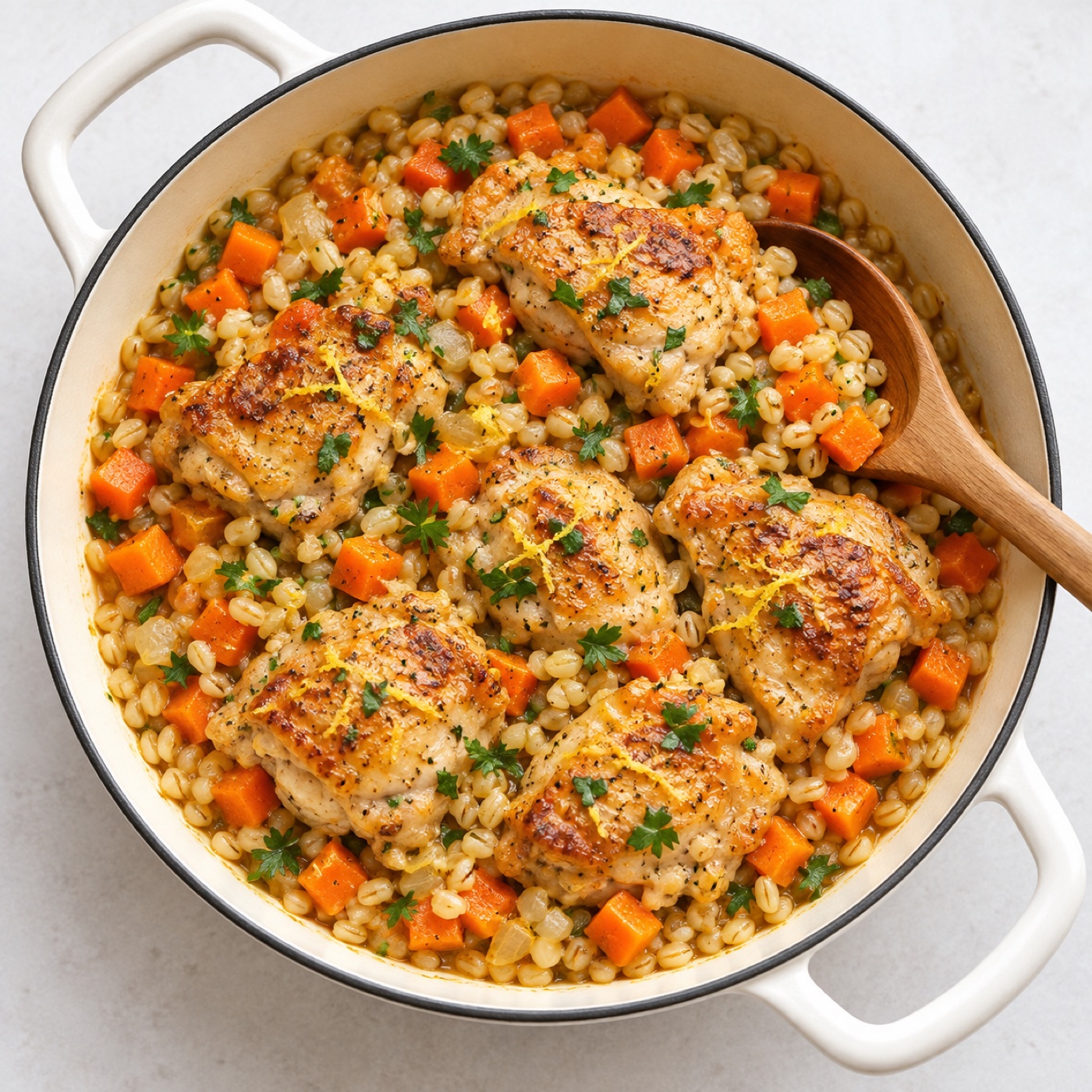
Lemon Chicken, Carrot & Pearl Barley Pilaf
Browned chicken thighs and sweet carrots cook with pearl barley, finished with lemon and parsley for a comforting dinner. An original recipe, not kitchen-tested.
The recipe
Lemon Chicken, Carrot & Pearl Barley Pilaf
Browned chicken thighs and sweet carrots cook with pearl barley, finished with lemon and parsley for a comforting dinner. An original recipe, not kitchen-tested.
Ingredients
- 600 g raw boneless, skinless chicken thighs, trimmed edible weight
- 250 g dry pearl barley
- 300 g raw carrots, trimmed edible weight, cut into 1 cm dice
- 180 g raw onion, peeled edible weight, finely chopped
- 900 ml prepared chicken stock (900 g), divided
- 20 g olive oil
- 42 g edible lemon: 40 g freshly squeezed juice and 2 g finely grated zest
- 15 g raw parsley leaves and tender stems, finely chopped
- 2 g salt
- 1 g ground black pepper
Instructions
- Prepare the vegetables, parsley and measured lemon juice and zest. Rinse the dry pearl barley in a sieve and drain thoroughly. Unfold the whole chicken thighs, pat dry and season with all the salt and pepper. The 90-minute cooking allowance includes two browning batches, bringing the stock to a simmer, up to 10 minutes of extra cooking and the final rest.
- Heat the oil in a wide, heavy saucepan with a tight-fitting lid over medium-high heat. Brown the chicken in two batches for 4 minutes on each side, allowing 16 minutes altogether. Transfer to a plate reserved for the partly cooked chicken.
- Reduce the heat to medium. Add the onion and carrots to the same pan and cook for 7 minutes, stirring regularly, until the onion softens. Stir in the drained barley for 1 minute.
- Pour in 800 ml of the stock and scrape up the browned bits. Allow approximately 5 minutes to bring it to a gentle simmer, then cover and cook over low heat for 15 minutes to give the barley a head start.
- Nestle the chicken into the barley and add its plate juices. Cover and simmer gently for 25 minutes. After 15 minutes, gently loosen the barley around the thighs and check for sticking; add some of the reserved 100 ml stock if needed, keeping track of the amount remaining.
- Check that the barley is tender with a slight chew and that the thickest part of every thigh reaches 74°C, following [FoodSafety.gov](https://www.foodsafety.gov/food-safety-charts/safe-minimum-internal-temperatures). Allow another 5–10 minutes of covered simmering if either needs longer. If the chicken finishes first, transfer it to a clean plate while the barley finishes; use the remaining measured stock as needed to prevent sticking.
- Return any removed chicken to the pan. Add any unused reserved stock and, if liquid pools around the barley, simmer uncovered for approximately 3 minutes until absorbed or reduced. Remove from the heat, cover and rest for 5 minutes. Fold the lemon juice, zest and parsley through the barley around the chicken, then divide between four bowls.
Storage and reheating
Divide leftovers into shallow containers and refrigerate within 2 hours, or within 1 hour when the temperature is above 32°C. Keep the fridge at 4°C or below, use within 3–4 days and reheat portions to 74°C throughout. Follow [USDA leftover guidance](https://www.fsis.usda.gov/food-safety/safe-food-handling-and-preparation/food-safety-basics/leftovers-and-food-safety).
Substitutions and ingredient notes
Swap the parsley for 15 g fresh dill. Pearl barley contains gluten; substituting another grain requires different liquid quantities and cooking times. Check stock labels for wheat, celery and other allergens, and check every replacement ingredient against diners' allergies.
Estimated nutrition
545 kcal · 38g protein · 62.4g carbohydrate · 16.3g fat · 13.1g fibre per serving.
Calculated from measured ingredients and generic composition data. Brand choices and substitutions change the estimate.
Storage references: USDA leftover guidance · FSA food guidance
Recipe images may be AI-generated illustrations. Nutrition figures are estimates.